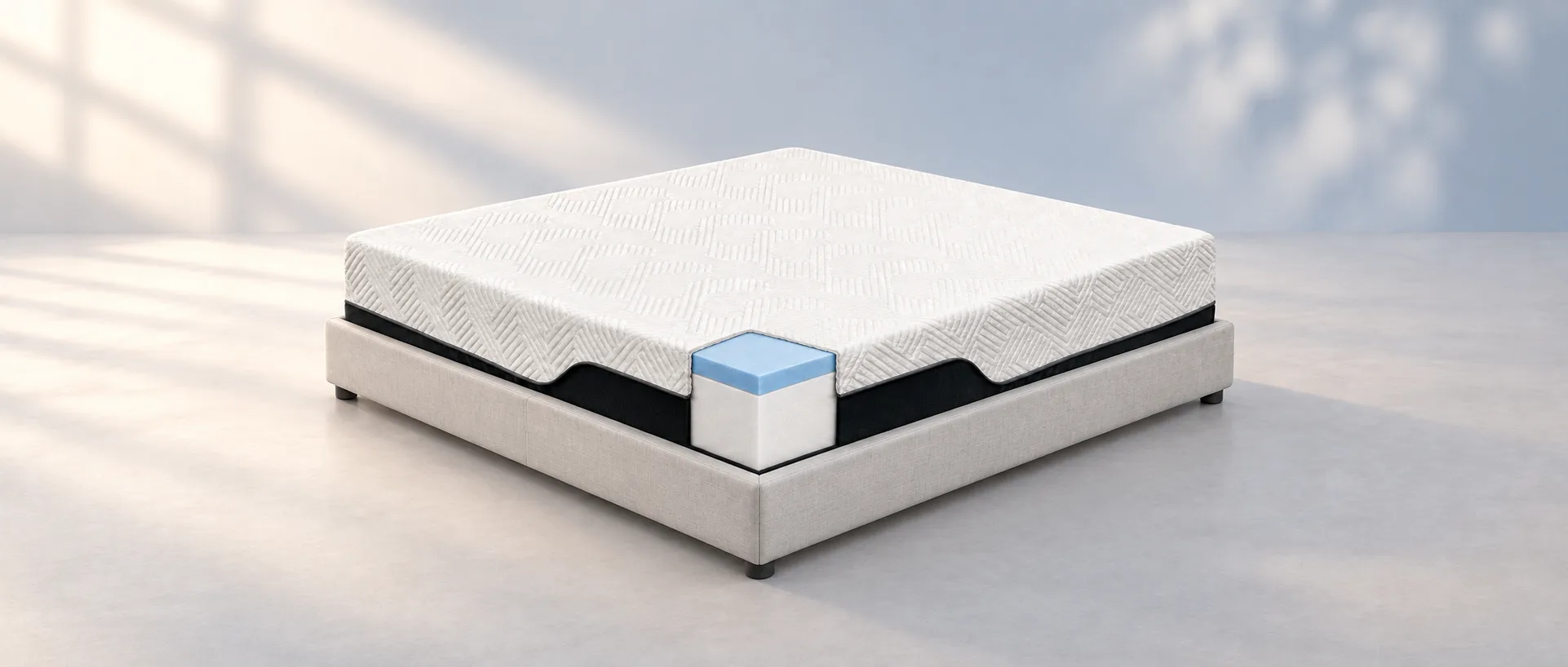
Most mid-range to high-end hotels do not use retail “luxury” mattresses.
Instead, they rely on project-grade pocket spring mattresses that are specifically engineered for commercial hospitality use.
These mattresses are characterized by:
-
A durable pocket spring core construction
-
A medium-firm comfort level that suits the majority of guests
-
High-performance materials designed to last 8–12 years
-
Customizable specifications with stable, long-term supply capability
For hotels, the goal is not maximum softness or short-term comfort.
The real priority is achieving the lowest guest complaint rate combined with the lowest total cost of ownership over time.
1. Why Hotels Don’t Use Retail Mattresses
Although retail mattresses are heavily marketed as “luxury” or “premium,” most mid-range and high-end hotels deliberately avoid using consumer-grade products. The reason is simple: retail mattresses are not designed for commercial hospitality environments.
1.1 Built for Home Use, Not Commercial Demand
Retail mattresses are engineered for:
• Single-user households
• Light to moderate nightly use
• Short-term comfort appeal in showrooms
Hotels, by contrast, require mattresses that can withstand daily use by hundreds of different guests each year. Retail models often lose structural integrity too quickly under these conditions, leading to sagging, uneven support, and increased guest complaints.
1.2 Excessive Softness Increases Complaint Rates
Many retail “luxury” mattresses emphasize plush comfort and softness. While this may feel appealing at first, overly soft mattresses tend to cause:
• Poor spinal alignment
• Lower back discomfort
Inconsistent sleep experiences across different body types
Hotels prioritize medium-firm support, which statistically satisfies the largest percentage of guests and minimizes negative feedback.
1.3 Higher Long-Term Cost Despite Lower Purchase Price
Although retail mattresses may appear cost-effective initially, they often result in:
• Shorter replacement cycles
• Higher maintenance and warranty issues
• Increased operational costs over time
Hotels focus on total cost of ownership, not upfront price. A project-grade mattress with a longer lifespan and lower complaint rate ultimately delivers far greater value.
1.4 Lack of Customization and Supply Stability
Retail mattresses are produced for individual consumers and offer limited customization. Hotels, however, need:
• Custom sizes and heights
• Specific firmness and fire-retardant standards
• Consistent product supply across multiple properties and years
Project-grade hospitality mattresses are designed to meet these requirements, while retail products rarely can.
2. What Is a Project-Grade Hotel Mattress?
A project-grade hotel mattress is a mattress specifically engineered for commercial hospitality use, not for retail consumers. Unlike home mattresses that focus on individual preference, project-grade mattresses are designed to perform consistently at scale—across hundreds or even thousands of rooms.
2.1 Designed for Commercial Use, Not Showroom Appeal
Project-grade mattresses are developed with a fundamentally different goal:
-
Consistent comfort for a wide range of guests
-
Long-term structural stability under daily use
-
Predictable performance over many years
They are not designed to feel “impressively soft” in a showroom for five minutes. Instead, they are built to deliver reliable sleep quality night after night.
2.2 Pocket Spring Core as the Industry Standard
The defining feature of most project-grade hotel mattresses is a pocket spring (individually wrapped coil) core.
This structure allows hotels to achieve:
-
Strong, even weight distribution
-
Reduced motion transfer between sleepers
-
Better spinal alignment for different body types
-
Higher durability compared to continuous or foam-only cores
For this reason, pocket spring construction has become the default choice for mid-range to high-end hotels worldwide.
2.3 Medium-Firm Comfort for Maximum Guest Acceptance
Hotels aim to satisfy the largest possible percentage of guests. Data from the hospitality industry consistently shows that medium-firm mattresses generate the lowest complaint rates.
A project-grade mattress typically avoids extremes:
-
Not too soft (which causes sagging and back pain)
-
Not too firm (which creates pressure points)
This balanced comfort profile ensures compatibility with back sleepers, side sleepers, and combination sleepers alike.
2.4 Built for Longevity: 8–12 Year Service Life
One of the biggest differences between retail and project-grade mattresses is lifespan.
Project-grade hotel mattresses are designed to:
-
Maintain structural integrity for 8–12 years
-
Resist permanent body impressions
-
Perform reliably despite high occupancy rates
This extended service life significantly reduces replacement frequency and overall operating costs.
2.5 Customization and Compliance Capabilities
Hotels rarely buy mattresses “off the shelf.” Project-grade suppliers typically offer:
-
Custom mattress heights and dimensions
-
Adjustable firmness specifications
-
Fire-retardant and safety compliance for different regions
-
Consistent product specifications for long-term reorders
This level of customization is essential for hotel chains that need uniform sleep experiences across multiple properties.
2.6 Why Project-Grade Matters in Hotel Operations
From an operational perspective, project-grade mattresses support:
-
Lower guest complaint rates
-
Easier housekeeping and maintenance
-
Predictable budgeting and procurement planning
-
Stronger brand consistency in sleep experience
In short, a project-grade hotel mattress is not just a bedding product—it is a long-term operational asset.

3. Guest Experience: Why Hotel Mattresses Feel “Just Right”
Hotel mattresses are rarely described as extremely soft or extremely firm. Instead, guests often say they feel “just right.” This is not accidental—it is the result of deliberate design choices based on guest behavior and complaint data.
3.1 Medium-Firm Is the Safest Choice
Hotels serve a highly diverse guest population, including people of different:
-
Ages
-
Body weights
-
Sleep positions
-
Comfort expectations
Because hotels cannot personalize mattresses for individual guests, they must choose a firmness level that works reasonably well for everyone. Industry experience consistently shows that medium-firm mattresses provide the best balance of support and comfort for the widest range of sleepers.
3.2 Medium-Firm Mattresses Generate the Fewest Complaints
From an operational standpoint, hotels are not trying to impress a small number of guests with extreme softness or luxury feel.
Instead, their objective is far more practical:
-
Avoid back pain complaints
-
Reduce sleep-related dissatisfaction
-
Deliver consistent comfort across all rooms
Medium-firm mattresses have proven to generate the lowest overall complaint rates because they minimize discomfort rather than chasing subjective preferences.
In short, hotels are not optimizing for “wow” reactions—they are optimizing for no complaints at all.
4. Cost Considerations: What Hotels Really Calculate
Mattress purchasing decisions in hotels are driven by financial logic, not retail-style pricing psychology.
4.1 Price Is Not the Same as Cost
Hotels evaluate mattresses based on Total Cost of Ownership (TCO) rather than initial purchase price alone. This approach considers how much a mattress truly costs over its entire service life.
| Factor | Retail Mattress | Hotel Project Mattress |
|---|---|---|
| Initial price | Lower | Moderate |
| Lifespan | 3–5 years | 8–12 years |
| Complaint risk | High | Low |
| Replacement frequency | High | Low |
| Long-term cost | Higher | Lower |
While retail mattresses may appear cheaper upfront, their shorter lifespan and higher complaint rates often lead to higher long-term costs through frequent replacements and operational disruptions.
4.2 Why Project-Grade Mattresses Win on TCO
Project-grade hotel mattresses are designed to:
-
Last significantly longer
-
Maintain comfort consistency over time
-
Reduce guest complaints and compensation costs
For hotel operators, this translates into predictable budgeting, fewer disruptions, and better return on investment.

5. Durability: How Hotel Mattresses Last a Decade
Durability is one of the most critical performance metrics for hotel mattresses. Unlike residential beds, hotel mattresses must maintain structural integrity under constant use.
5.1 Key Design Factors Behind Long Lifespan
Hotel mattresses achieve 8–12 years of service life through several engineering choices:
-
Thicker-gauge steel pocket springs for stronger support
-
High-density support and comfort materials that resist compression
-
Flip-friendly or rotation-ready designs to distribute wear evenly
These features dramatically slow down sagging, body impressions, and comfort degradation.
5.2 Designed for Stability, Not Short-Term Luxury
Hotel mattresses are engineered with a clear long-term objective:
Not peak comfort in year one, but stable, reliable performance in year eight.
This philosophy ensures that guests receive a consistent sleep experience over time, while hotels benefit from lower replacement costs and operational efficiency.