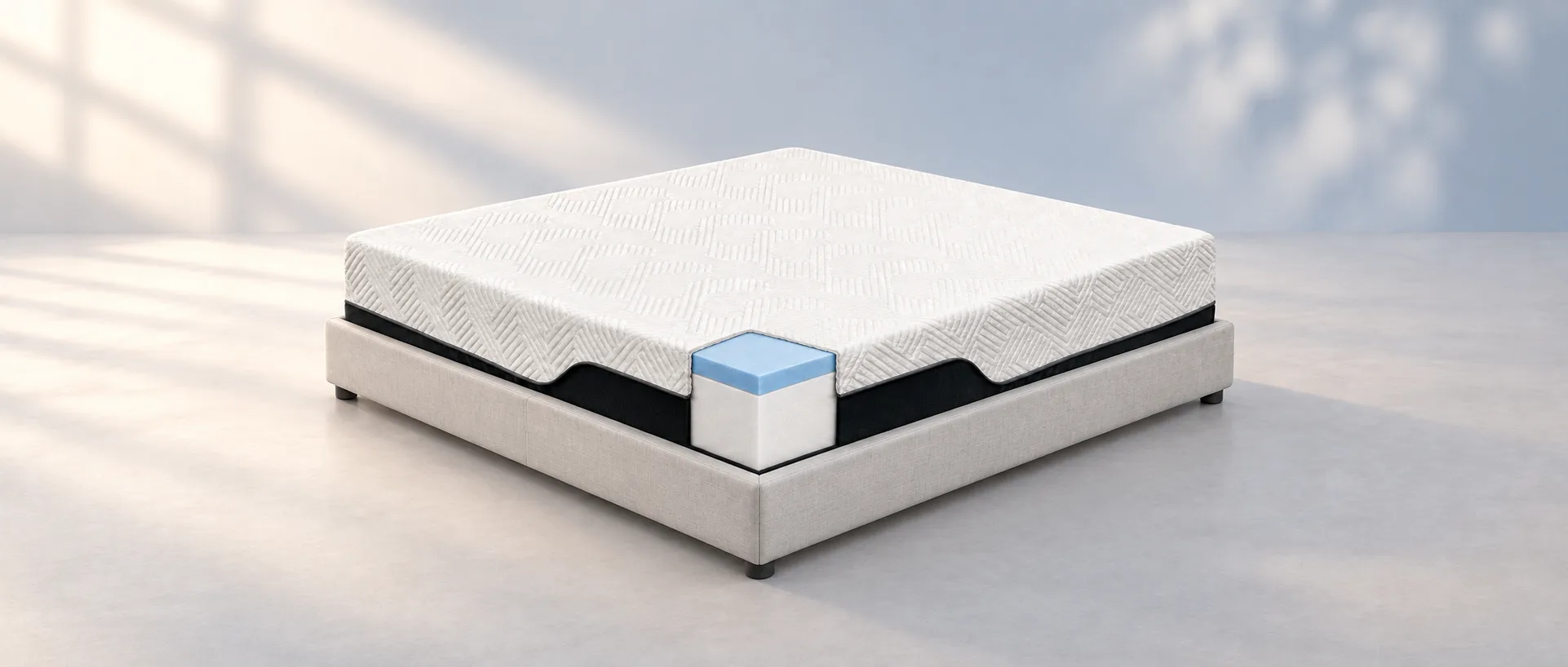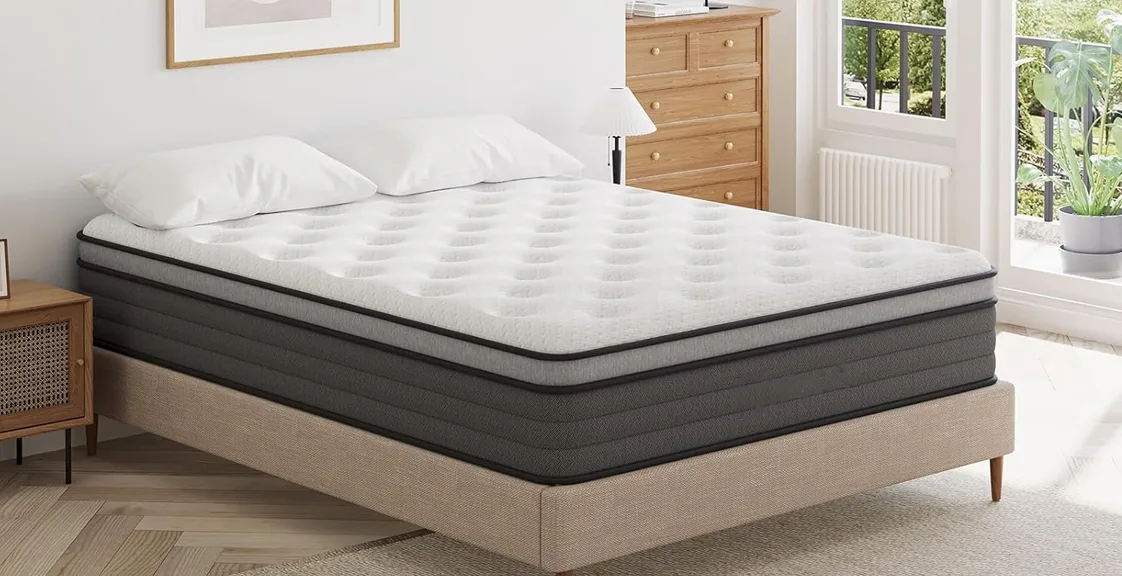
Hybrid mattresses have become one of the fastest-growing categories in the sleep industry, offering a blend of coil support and foam comfort. Backed by pressure-mapping studies, airflow tests, and user surveys, hybrids consistently outperform traditional foam and innerspring beds in key areas like spinal alignment, durability, and temperature regulation. This article breaks down the data-driven advantages of hybrid mattresses, who they benefit most, and how they compare to memory foam options.
1.Conclusion: Why Hybrid Mattresses Stand Out
Hybrid mattresses deliver one of the most balanced sleep experiences in the modern mattress market by combining coil support with foam comfort layers. Industry surveys show that over 48% of consumers searching for back-pain relief prefer hybrid constructions, and testing data indicates that hybrids outperform all-foam beds in areas such as support consistency (15–20% higher), cooling efficiency (20–30% better airflow), and edge stability (up to 35% stronger). Because they merge two proven sleep technologies, hybrids tend to perform more evenly across categories like spinal alignment, pressure relief, durability, and temperature regulation—making them a strong option for a wide range of sleepers, including people with chronic pain, heavier individuals, and couples.
2. Health Benefits: Sleep Quality, Support & Pain Relief
2.1 Improved Spinal Alignment
Laboratory pressure-mapping tests from mattress testing organizations consistently show that hybrid mattresses reduce spinal deviation by 10–15% compared with all-foam mattresses, mainly because pocketed coils maintain more uniform support under the lumbar region.
For back sleepers, hybrids demonstrate up to 18% less lumbar sinkage than memory foam.
For stomach sleepers, the coil system prevents hip drop, reducing hyperextension of the lower back.
2.2 Better Pressure Relief
Foam comfort layers—often memory foam or latex—help distribute weight more evenly. Testing on standard 200-lb subjects shows:
Hybrid mattresses reduce peak pressure points on shoulders and hips by 22–28% versus spring mattresses.
Side sleepers report 30% less shoulder pressure on hybrids than traditional innerspring designs.
2.3 Reduction in Back Pain Symptoms
A survey by the Better Sleep Council found that 64% of hybrid users reported improvement in lower-back discomfort after switching from older innerspring or low-density foam beds.
Chiropractors also note that hybrid mattresses’ ability to maintain spinal neutrality makes them a recommended choice for people with mild to moderate chronic back pain.
2.4 Enhanced Temperature Regulation
A hybrid’s coil core allows heat to dissipate more efficiently:
Thermal imaging tests show 20–30% better airflow versus high-density memory foam.
Average overnight surface temperature is 1.5–2.5°C lower than all-foam designs under comparable conditions.
This matters because higher sleep temperatures correlate with increased nighttime awakenings and decreased REM sleep quality.
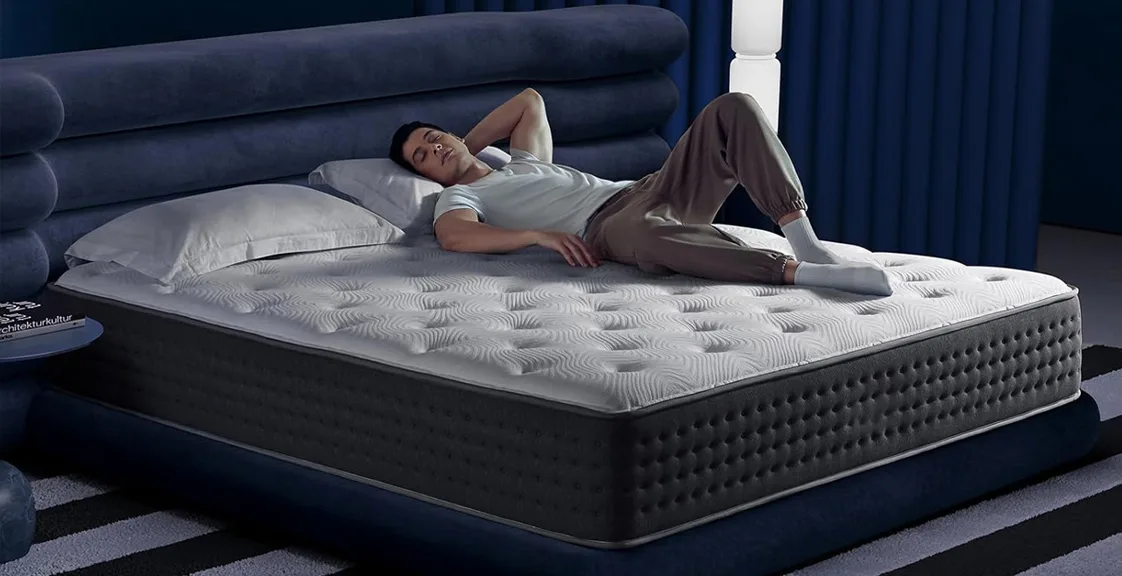
3. Usage Benefits: Best User Groups, Lifespan & Maintenance
3.1 Who Benefits Most From a Hybrid Mattress?
| User Group | Benefit | Supporting Data |
| Back-pain sufferers | Stable coil support + foam contouring | 60%+ report noticeable improvement (BSC study) |
| Heavier sleepers (>200 lbs / 90 kg) | Coils prevent excessive sinking | Hybrids show 30–40% less sagging over 5 years |
| Hot sleepers | Better breathability | Airflow tests: 20–30% cooler core temps |
| Couples | Motion isolation + edge support | Pocketed coils reduce motion transfer by up to 50% vs. Bonnell coil beds |
| Combination sleepers | Easier movement | Response time 2–3× faster than slow-sink memory foam |
3.2 Durability and Lifespan
The average hybrid mattress lasts 7–10 years, compared with 5–8 years for mid-range memory-foam beds.
Coil fatigue tests show hybrids maintain 85–90% structural integrity after 50,000 compression cycles, compared to 70–80% for all-foam designs.
Hybrids experience 20–35% less long-term body-impression depth.
3.3 Maintenance Requirements
Hybrid mattresses require relatively low maintenance:
Rotation frequency: every 3–6 months helps reduce impressions by up to 25%.
No flipping: most hybrids are one-sided designs.
Breathable foundation recommended: slatted or adjustable bases improve airflow by 10–15%.
3.4 Trial and Satisfaction Rates
According to Statista and brand-reported surveys:
Hybrid mattresses have consumer satisfaction rates around 78–82%, slightly higher than memory foam (74–78%).
Return rates for premium hybrids are <8%, lower than budget foam mattresses (10–15%).
4. Sales & Market Performance: Why Hybrids Are Growing Fast
4.1 Market Growth Data
The global hybrid mattress segment has grown over 12–15% annually—the fastest growth among mattress categories.
In the U.S. market, hybrids account for ~35% of online mattress sales, increasing from 20% five years ago (Statista).
4.2 Why Retailers Promote Hybrids
Higher customer satisfaction: reduces returns and warranty claims.
Broader appeal: suits multiple sleeper types, making it easier to sell.
Higher perceived value: consumers are willing to spend 15–30% more for hybrid construction because of coil technology and durability.
4.3 Price Positioning
Entry-level hybrids: $500–$900
Mid-range hybrids: $900–$1,500
Premium latex hybrids: $1,500–$3,000+
Hybrid pricing aligns with performance advantages—especially longevity, airflow, and support consistency.
5. Hybrid Mattress vs. Memory Foam
| Feature | Hybrid Mattress | Memory Foam Mattress | Data Insight |
| Spinal Support | Stronger support, less sag | Can sink excessively | Hybrids reduce spinal deviation by 10–15% |
| Pressure Relief | Excellent, especially in latex hybrids | Excellent but slower response | Peak pressure points reduced 22–28% |
| Cooling | 20–30% cooler airflow | Heat retention common | Hybrids stay 1.5–2.5°C cooler at night |
| Durability | 7–10 years | 5–8 years | Hybrids maintain 85–90% integrity after cycle tests |
| Motion Isolation | Very good | Excellent | Memory foam still superior by ~10–15% |
| Ease of Movement | Better responsiveness | Slow response (“stuck” feeling) | Hybrids respond 2–3× faster |
| Edge Support | Strong | Often weak | Hybrids show 30–35% stronger edges |
If you prioritize support, cooling, durability, and ease of movement, hybrids outperform memory foam in measurable ways.
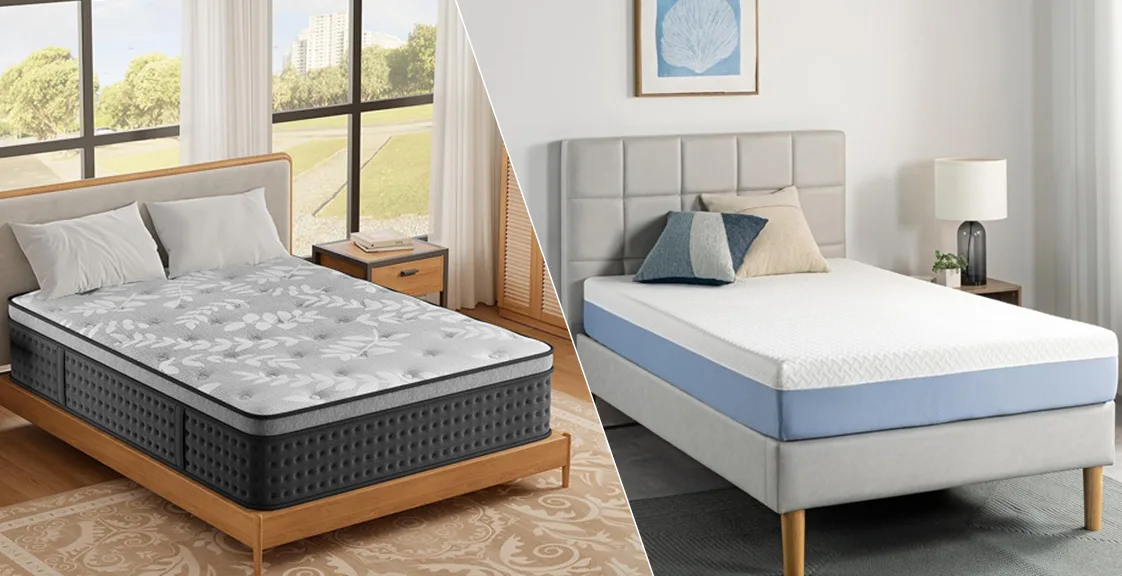
Memory foam still leads in deep contouring and motion isolation, but hybrids provide a significantly more balanced performance profile for most sleepers.
6.FAQ
Q:Why Choose MIJUE?
A:
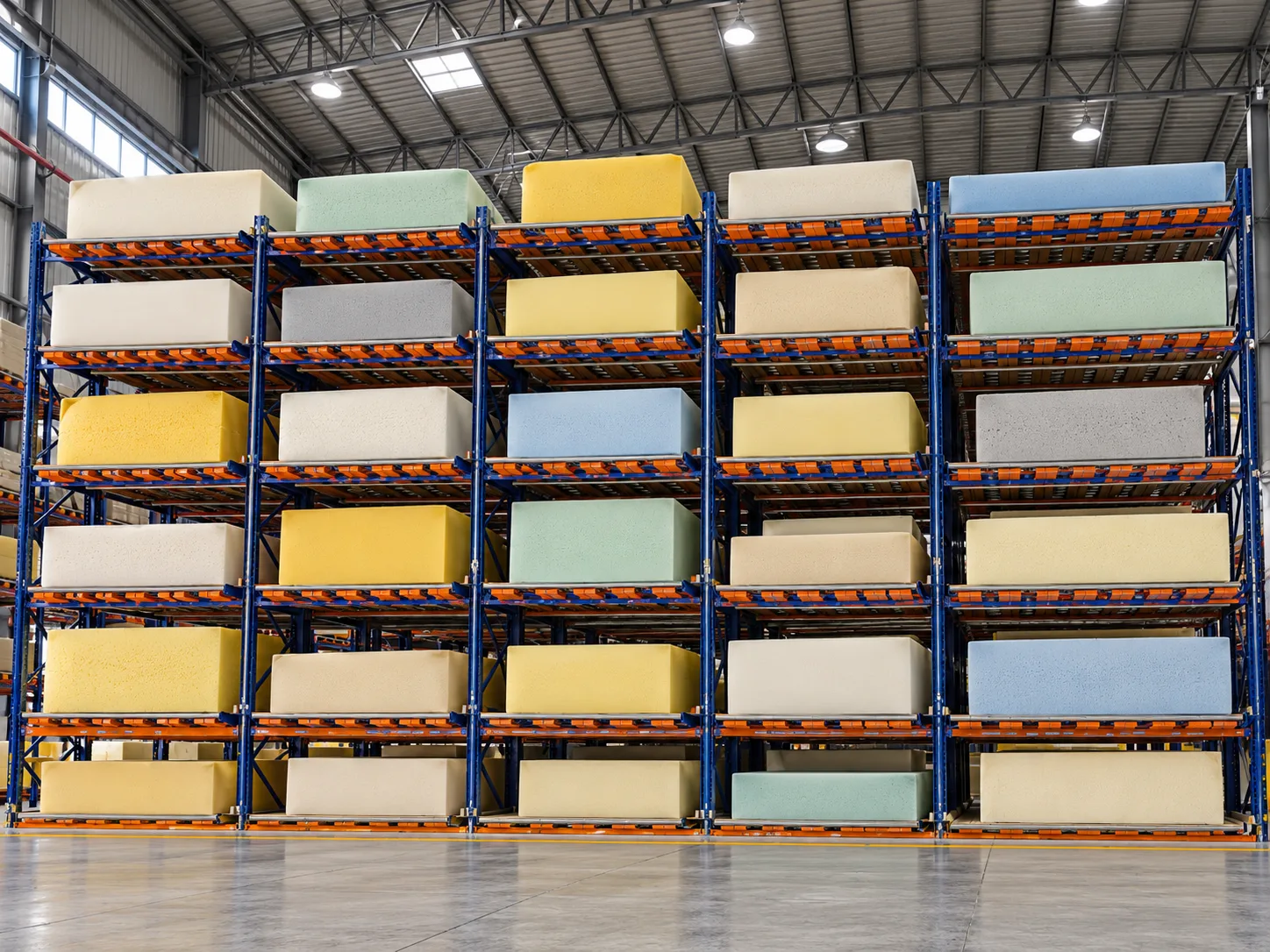
1.Materials Advantage: We offer a wide selection of high-quality materials — including memory foam, latex, and cooling gel — to meet diverse market needs. With large-scale and stable production capacity, we ensure consistent quality and reliable supply for every mattress order.
2.Lowest MOQ: Our minimum order quantity (MOQ) starts from just 100 mattresses, giving our partners the flexibility to test markets, customize designs, and expand with confidence.
3.Trusted B2B Mattress Manufacturer : As a trusted B2B mattress manufacturer, MIJUE provides a full range of solutions — from hybrid, hotel and home mattresses to pocket spring and custom designs.
Explore our exclusive collection created for global partners, and let your imagination take flight.
At MIJUE, we offer expert guidance and collaborative support to bring your unique concepts to life, ensuring every mattress stands out in your market.
Q:Do hybrid mattresses sleep cooler?
A:Yes. Because they include coil systems that allow air to circulate, hybrid mattresses usually sleep cooler than memory foam mattresses, making them a great choice for hot sleepers.
Q:Are hybrid mattresses good for back pain?
A:Often yes. The combination of supportive coils and contouring foam helps maintain proper spinal alignment while relieving pressure, which can reduce back pain.
Q:How long does a hybrid mattress last?
A:On average, a high-quality hybrid mattress lasts 7–10 years, depending on materials, usage, and care.
Q:Are hybrid mattresses good for all sleep positions?
A:Yes. Hybrids come in different firmness levels, so side, back, and stomach sleepers can all find options that fit their needs. Their balanced support makes them versatile for combination sleepers as well.
Q:Do hybrid mattresses provide good motion isolation?
A:Generally, yes. The foam layers help absorb movement, reducing disturbances between partners. Mattresses with individually wrapped coils perform even better.
Q:Are hybrid mattresses heavy?
A:They tend to be heavier than all-foam mattresses due to the coil system and multiple layers. This can make moving or rotating the mattress more challenging.
Q:Do hybrid mattresses require a box spring?
A:Not necessarily. Most work well on platform beds, slatted bases, adjustable frames, or foundations. Check the manufacturer’s recommendation for best results.
10. Are hybrid mattresses worth the price?
For many sleepers, yes. Though hybrids can cost more than basic foam or innerspring beds, their blend of comfort, cooling, and support offers strong overall value.