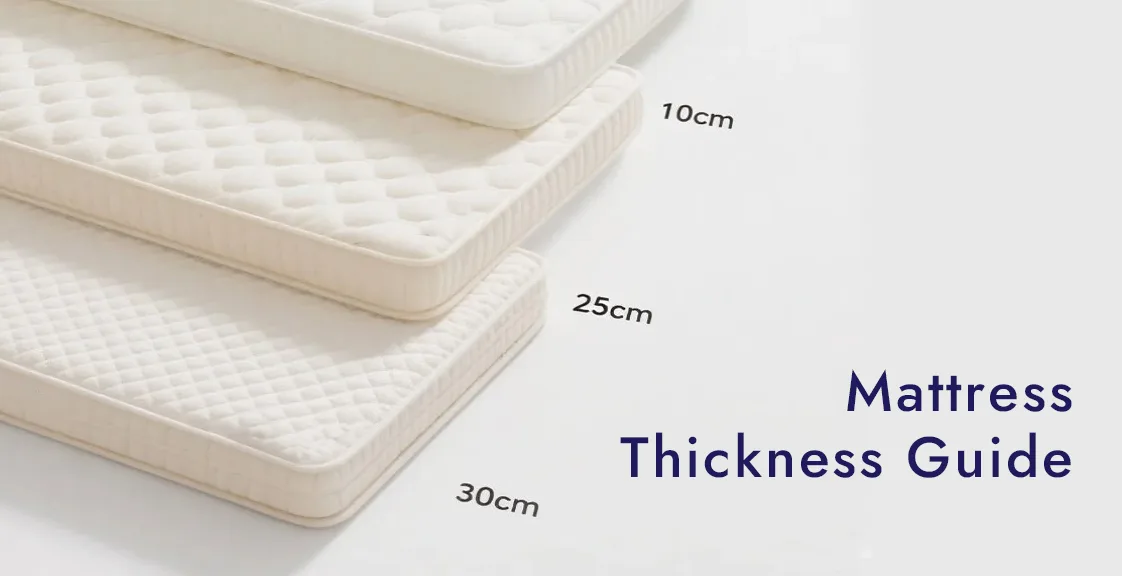
Mattress thickness is often overlooked, yet it directly affects comfort, support, durability, and daily usability. Many people focus on firmness or material, but choosing the wrong thickness can lead to poor sleep quality, back discomfort, or even practical issues like difficulty getting in and out of bed.
This guide explains how thick a mattress should be, based on real-life needs.
1. What Does Mattress Thickness Actually Mean?
Mattress thickness refers to the total height of the mattress, usually measured from bottom to top, including:
Base support layer
Comfort layers
Quilted or pillow-top cover
Most mattresses range from 6 to 14 inches, but thicker does not always mean better.
2. Common Mattress Thickness Categories
2.1 Thin Mattresses (6–8 inches)
Best for:
Guest rooms
Children or bunk beds
Lightweight sleepers
Platform beds with solid support
Pros:
Easy to move
Lower cost
Fits low-profile bed frames
Cons:
Limited pressure relief
Shorter lifespan for adults
Not ideal for side sleepers
In daily life, thin mattresses often feel fine at first but lose comfort faster under regular adult use.
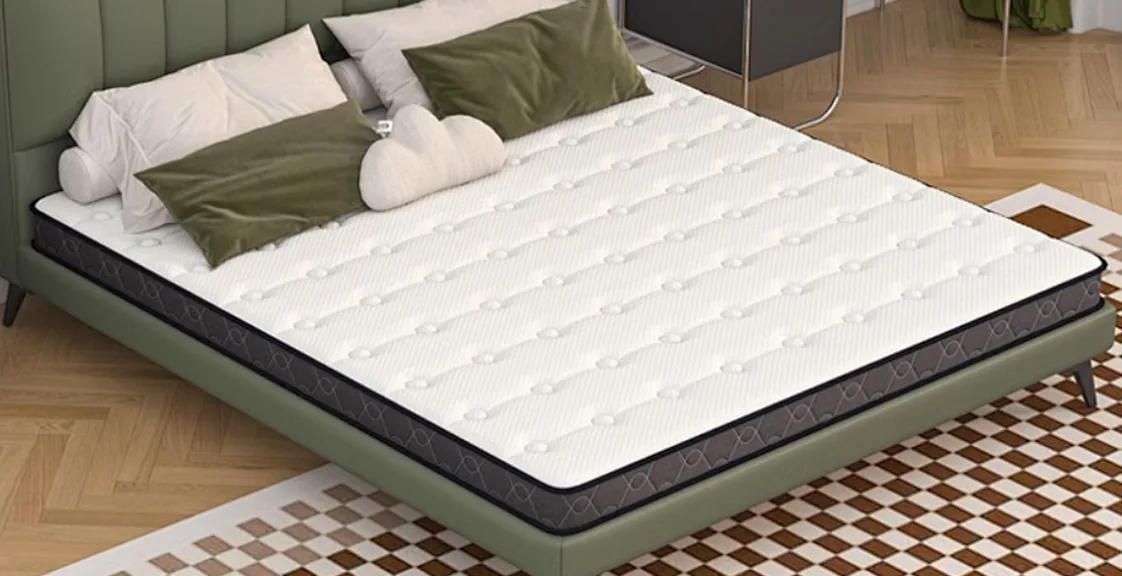
2.2 Standard Mattresses (9–11 inches)
Best for:
Most adults
Couples
Apartments and family homes
Pros:
Balanced support and comfort
Suitable for most sleep positions
Works with most bed frames
Cons:
Not ideal for very heavy sleepers
Less “luxury” feel for some users
This range is the most practical and popular choice for everyday sleeping.
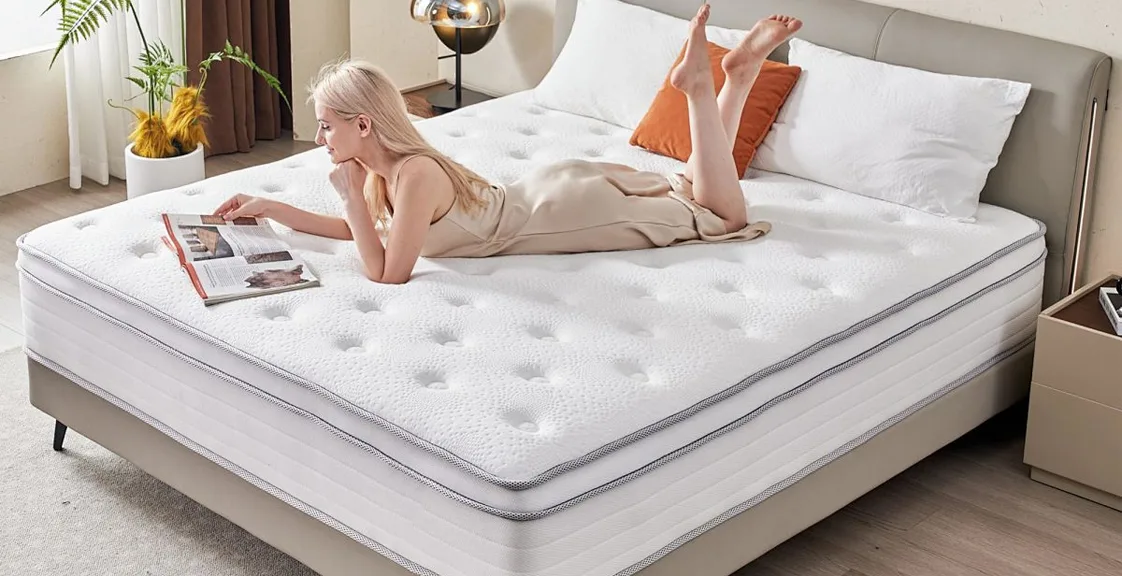
2.3 Thick Mattresses (12–14+ inches)
Best for:
Side sleepers
Heavier individuals
Premium comfort seekers
Hotel-style beds
Pros:
Better pressure relief
More comfort layers
Enhanced motion isolation
Cons:
Heavier and harder to move
May require deep-pocket sheets
Can feel too high on tall bed frames
In real homes, overly thick mattresses sometimes cause issues like sheets not fitting or beds feeling too tall, especially for elderly users.
3. How Thickness Affects Sleep Comfort
Thickness influences how deeply your body sinks and how evenly weight is distributed.
Too thin → bottoming out, poor spinal alignment
Too thick → excessive sink, harder movement, heat retention
4. Choosing Mattress Thickness Based on Sleep Position
Back Sleepers
Recommended thickness: 9–11 inches
Needs balanced support without deep sink
Side Sleepers
Recommended thickness: 11–14 inches
Extra comfort layers reduce shoulder and hip pressure
Stomach Sleepers
Recommended thickness: 8–10 inches
Thicker mattresses may cause lower-back arching

5. Body Weight and Mattress Thickness
Body weight plays a major role:
Under 130 lbs: 8–10 inches is often sufficient
130–230 lbs: 9–12 inches works best
Over 230 lbs: 11–14 inches, with dense support layers
In everyday use, heavier sleepers often complain about sagging—not because of firmness, but because the mattress is too thin.
6.Bed Frame and Practical Height Considerations
Mattress thickness should match your bed setup.
Platform bed: medium thickness works best
Box spring + mattress: avoid extra-thick designs
Elderly users: total bed height should allow feet to touch the floor when seated
A comfortable bed is not just about sleep—it’s also about getting in and out safely every day.
7.Is Thicker Always Better?
No. A thicker mattress only helps if:
The support core is strong
Materials are durable
Thickness matches your body and bed frame
Poor-quality thick mattresses can still sag quickly, while a well-built 10-inch mattress can outperform a cheap 14-inch one.
8.Conclusion: The Right Thickness Is About Fit, Not Trend
There is no “perfect” mattress thickness for everyone. The best choice depends on sleep position, body weight, bed height, and daily habits. Instead of chasing the thickest option, choose a mattress that fits your real-life needs and provides balanced support over time.
Comfort comes from proper design, not just extra inches.