Why Choosing the Right Mattress
Latex mattress vs spring mattress — which one is actually better for your sleep?
This is one of the most common questions people ask when replacing a mattress, and the answer isn’t as simple as choosing the more expensive or more popular option.
Different mattress structures provide very different types of support, pressure relief, and temperature control. Choosing the wrong one can lead to back pain, restless sleep, and frequent waking at night.
In this guide, we compare latex mattress vs spring mattress across structure, comfort, breathability, durability, and suitability for different sleepers, so you can quickly identify which option fits your body and sleep habits best.
1.What’s the Real Difference Between Latex and Spring Mattresses?
1.1 Structure and Features of Latex Mattresses
Latex mattresses are built around a latex foam core, which can be made from natural latex, synthetic latex, or a blend of both.
Natural latex is derived from rubber tree sap and is known for strong elasticity, fast responsiveness, and natural resistance to dust mites and bacteria. Synthetic latex, while more affordable, typically has lower durability and less resilient rebound.
In terms of construction, latex mattresses may use a single solid slab of latex or a layered design combined with other materials such as memory foam or coconut fiber to fine-tune firmness and support.
Latex naturally adapts to body contours, offering consistent support to pressure points like the shoulders, waist, and hips.
Overall feel: soft, adaptive, and gently supportive — ideal for sleepers who prefer a cradling sensation.
1.2 Structure and Features of Spring Mattresses
The core of a spring mattress is its metal coil system, which typically comes in two types:
- Bonnell (connected) springs— coils are linked together, providing uniform support but transferring motion easily.
- Pocket springs (individually wrapped)— each coil works independently, improving motion isolation and body contouring. This is now the standard for mid-to-high-end mattresses.
Above the spring system, comfort layers made from memory foam, latex, or other cushioning materials enhance pressure relief and surface comfort.
In essence, a quality spring mattress is a support core plus multiple comfort layers, not just metal coils.
Support primarily comes from the mechanical resistance of the springs, creating a more noticeable lifting sensation and structural firmness.
1.3 Key Structural Differences That Affect Sleep
From a technical perspective, the main differences between latex mattress vs spring mattress lie in:
- Rebound behavior:
Latex responds through material elasticity with smoother feedback, while springs rebound mechanically with firmer pushback. - Pressure distribution:
Latex distributes weight across a larger surface, whereas pocket springs provide targeted point-by-point support. - Overall sleep feel:
Latex feels enveloping and cushioned; spring mattresses feel buoyant and supportive.
This is why choosing between latex mattress vs spring mattress should always be based on how the structure supports your body, not just on material labels.
2.Comfort Comparison: Which Mattress Feels Better?
2.1 Spinal Support and Alignment
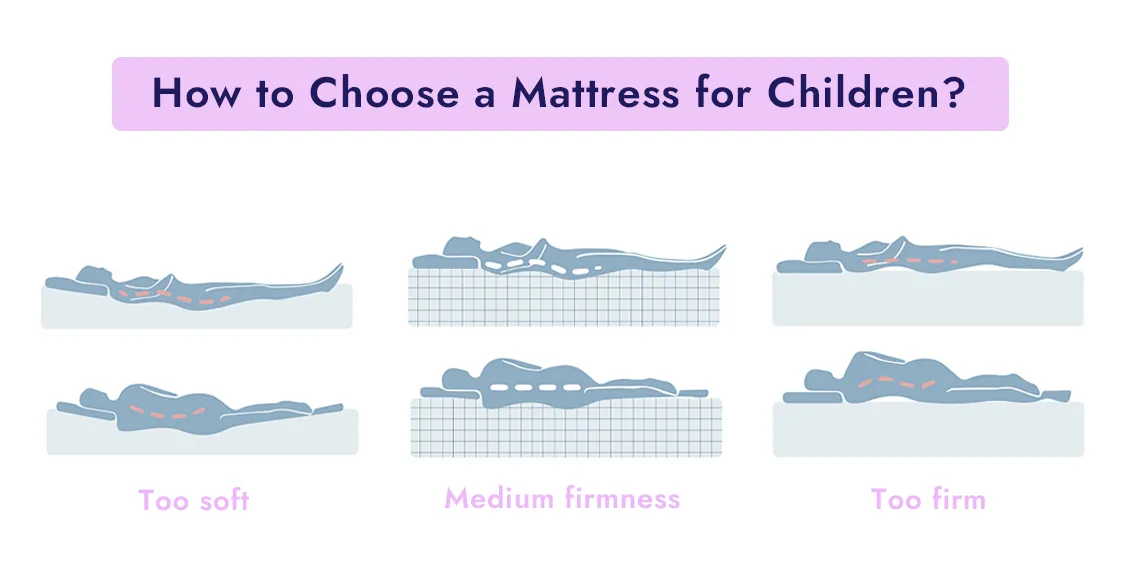
A good mattress should keep your spine in a neutral position.
If it’s too soft, your lower back may sink; too firm, and your shoulders and hips take excessive pressure.
Lighter individuals often feel more comfortable on slightly softer surfaces, while heavier sleepers generally need stronger support systems. Spring mattresses tend to perform better under higher body weight, but high-density latex mattresses can also deliver excellent spinal alignment when properly designed.
What matters most isn’t the material alone — it’s whether the entire structure matches your body type and sleep posture.
2.2 Body Contouring and Pressure Relief
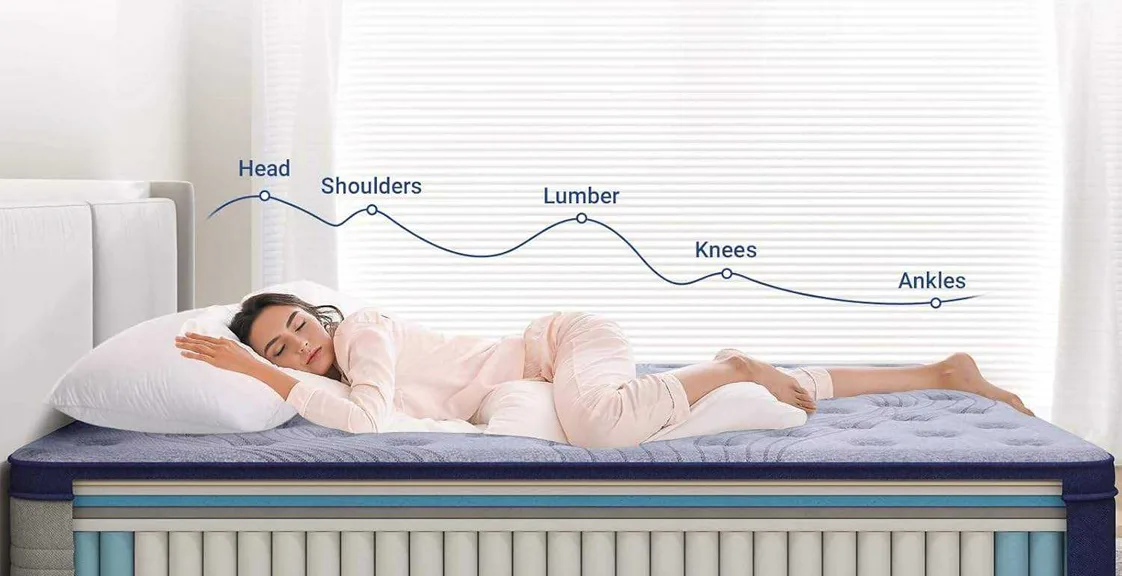
Side sleepers place the most pressure on shoulders and hips. Poor contouring can cause numbness or frequent position changes.
Latex excels in adaptive compression, adjusting instantly to body curves. High-quality pocket spring mattresses achieve similar effects through zoned support systems that vary coil tension across different body areas.
If you are sensitive to pressure points or frequently wake up sore, contouring capability should be a top priority.
2.3 Motion Isolation and Partner Disturbance
For couples, motion transfer is critical. If one person moves frequently, the other may be disturbed.
Latex absorbs vibration well due to its continuous material structure. Pocket spring systems reduce motion by isolating each coil.
By contrast, connected spring systems transmit movement more easily and are less suitable for light sleepers.
If you or your partner sleep lightly, prioritize mattresses with strong motion isolation.
2.4 Firmness Options and Sleep Style Compatibility
Modern mattress design focuses heavily on zoning and firmness tuning. Both latex and spring mattresses can be engineered in multiple firmness levels.
However, spring systems allow more complex zoning configurations, while latex firmness adjustments rely mainly on foam density and layering.
Your sleeping position matters:
- Back sleepers: medium-firm support
- Side sleepers: slightly softer surface with good contouring
- Combination sleepers: responsive surfaces that adapt quickly
This is why “best mattress” is never universal — it’s highly personal.
3.Breathability and Temperature: Will It Sleep Hot?
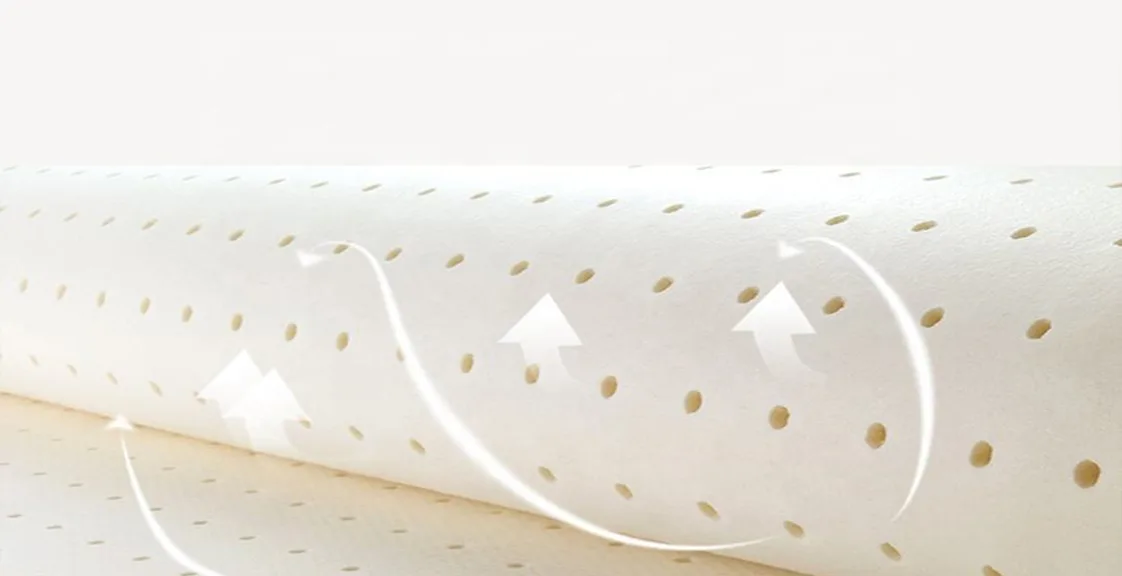
3.1 Airflow in Latex Mattresses
Latex foam typically contains ventilation channels that promote airflow. However, overall heat dissipation also depends on mattress thickness, bed base design, and room ventilation.
Very thick latex layers or solid platform beds may reduce airflow, increasing heat retention.
3.2 Ventilation Advantages of Spring Mattresses
Spring cores naturally create air channels that allow heat and moisture to escape more efficiently.
That said, top comfort layers still matter — dense memory foam may trap heat regardless of spring airflow.
So don’t just look for coils; examine the full material stack.
3.3 Recommendations for Hot Sleepers
If you sweat easily or live in humid climates, prioritize mattresses with:
- breathable comfort layers
- moisture-wicking covers
- ventilated support cores
Pairing the mattress with breathable bedding and slatted bed frames also improves cooling performance.
4.Durability and Maintenance: Which Lasts Longer?
4.1 Expected Lifespan
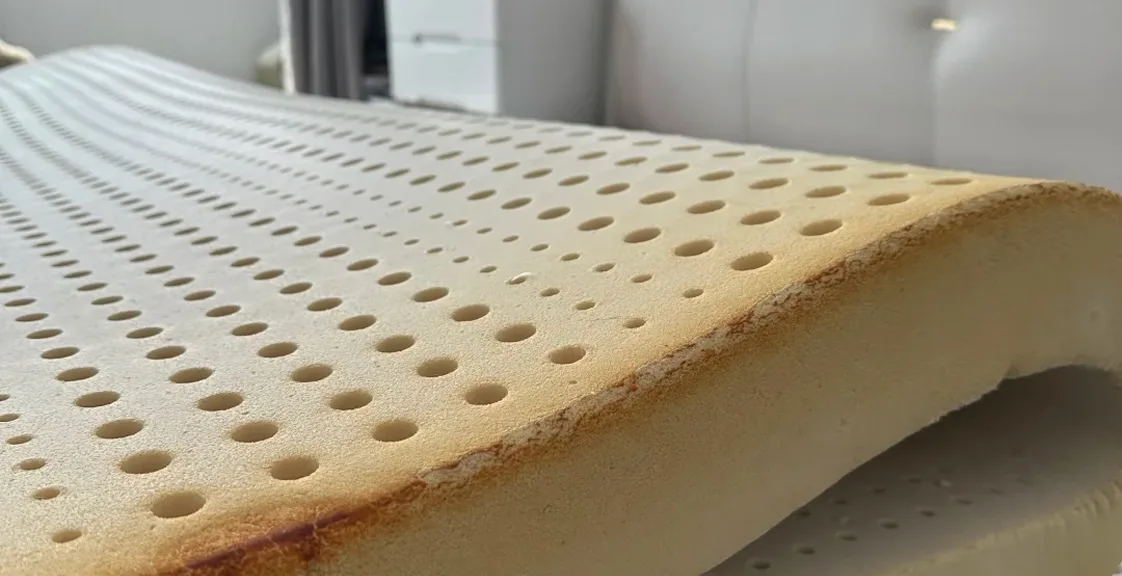
Latex gradually oxidizes over time, leading to reduced elasticity.
Spring systems may experience metal fatigue or localized sagging after years of compression.
Well-made latex and high-quality pocket spring mattresses both typically last 8–10 years or more, depending on materials and usage.
4.2 Maintenance Requirements
Spring mattresses usually benefit from regular rotation to prevent uneven wear.
Latex mattresses should be protected from moisture and direct sunlight to slow material degradation.
Using mattress protectors and keeping good ventilation significantly extends lifespan for both types.
5.Three Common Mattress Shopping Mistakes
- Trusting “natural latex” labels without checking actual latex content and production method
- Comparing spring counts instead of spring quality, wire thickness, and zoning design
- Lying down for only a few minutes instead of testing multiple sleeping positions
Reminder: Mattress trial periods and return policies are just as important as technical specs.
Final Thoughts: There Is No Best Mattress — Only the Best Fit for You
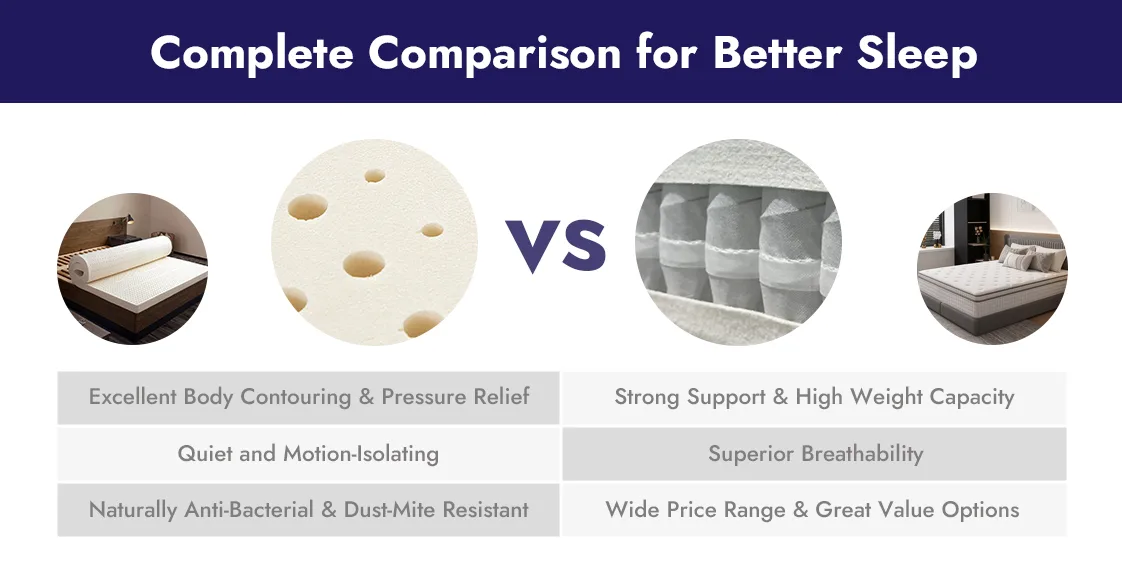
When deciding between a latex mattress vs spring mattress, there is no universally “best” option — only the one that best matches your body and sleep habits. Latex mattresses excel in body contouring and pressure relief, offering a soft, adaptive sleep experience. Spring mattresses stand out for strong structural support and flexible zoning design.
The right choice depends on your body weight, sleep position, partner movement sensitivity, and temperature preference. Rather than focusing only on material labels, evaluate the mattress as a complete system — structure, comfort layers, and real-life performance all matter.
Whenever possible, testing mattresses in person or choosing brands that offer home trials can make a huge difference in finding the right long-term sleep solution.