In the competitive bedding industry, material selection defines your brand’s comfort standard and market positioning.
Among all pillow types, goose down and memory foam dominate both retail and hospitality sectors, each offering distinct advantages in comfort, support, and cost efficiency.
This guide provides a detailed comparison of goose down vs memory foam pillows from a B2B perspective, helping distributors, hotel suppliers, and OEM buyers choose the right material for different market segments.
1. Overview of Both Pillow Types
1.1 Goose Down Pillow
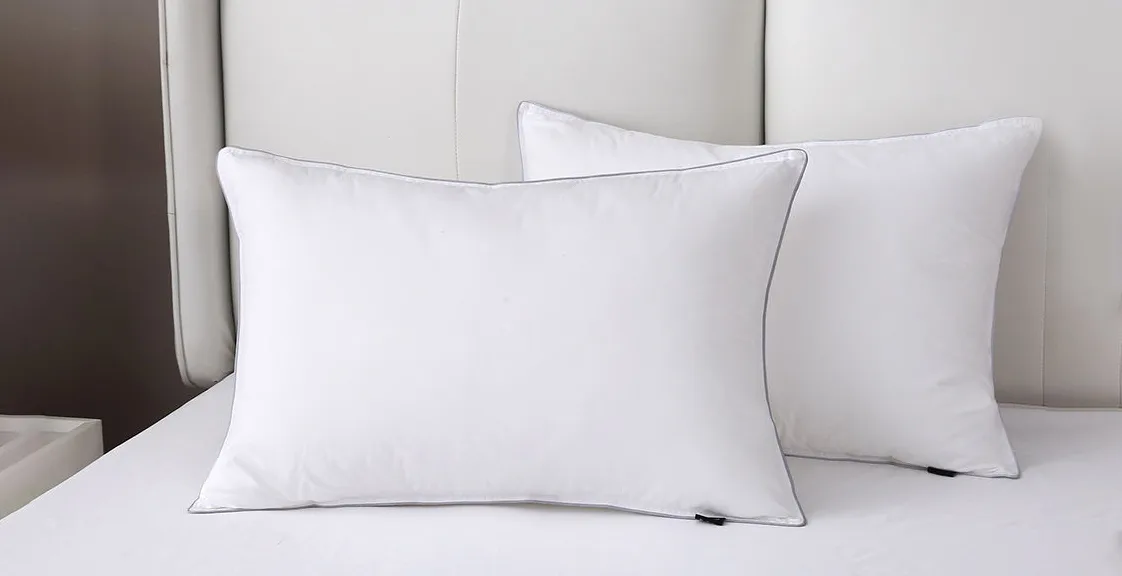
Made from the soft under-feathers of geese, goose down pillows are known for luxury softness and natural breathability.
They are often positioned in high-end hotels, resorts, and luxury bedding lines for their premium hand feel and brand perception.
1.2 Memory Foam Pillow
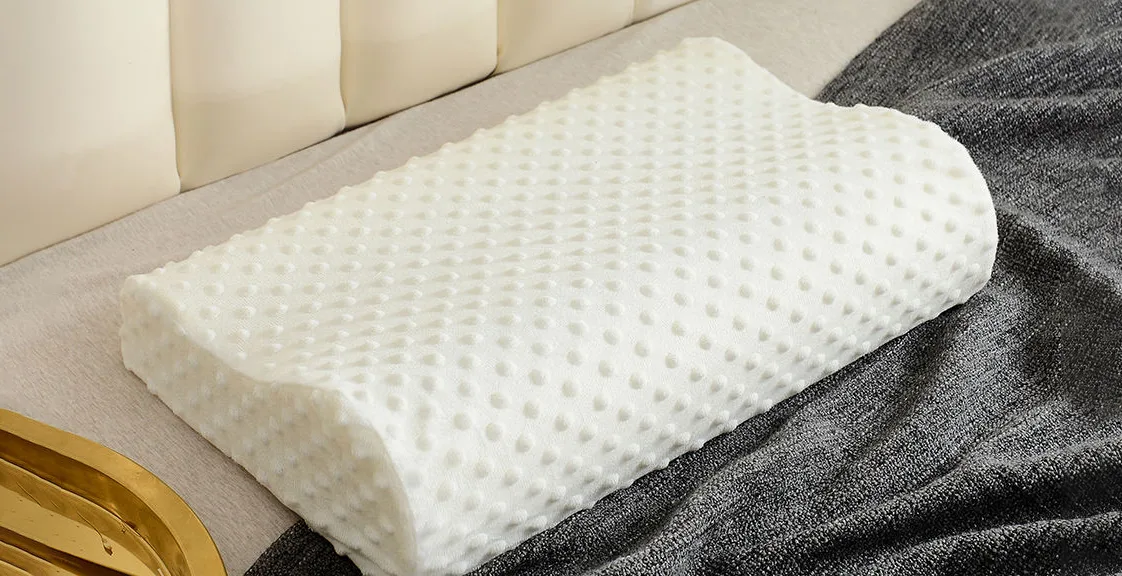
Constructed from viscoelastic polyurethane foam, memory foam pillows contour precisely to the sleeper’s neck and head for orthopedic support and shape retention.
They are widely used in mid- to high-end consumer markets, healthcare facilities, and hotels that prioritize durability and ergonomic performance.
2. Target Market Segmentation
| Segment | Best Option | Reason |
| Luxury Hotels & 5-Star Resorts | Goose Down | Natural softness, premium image |
| Business Hotels & Long-Stay Lodges | Memory Foam | Consistent support, longer lifespan |
| Retail & E-commerce | Both | Appeal to different demographics |
| Healthcare & Chiropractic Clinics | Memory Foam | Orthopedic support & hygiene |
| Eco-conscious Brands | RDS Goose Down / CertiPUR-US® Foam | Certified sustainability |
For wholesalers and OEM buyers, offering both materials broadens your catalog and meets diverse client expectations.
3. Technical Comparison: Goose Down vs Memory Foam
| Property | Goose Down Pillow | Memory Foam Pillow |
| Core Material | Natural goose down | Viscoelastic foam |
| Support Level | Soft to medium | Medium to firm |
| Durability | 2–3 years | 4–6 years |
| Shape Retention | Requires fluffing | Self-recovering foam |
| Weight | Lightweight | Denser and heavier |
| Temperature Regulation | Excellent airflow | Moderate (gel options available) |
| Hygiene | May attract dust mites | Hypoallergenic, antimicrobial |
| Certifications | RDS / OEKO-TEX® | CertiPUR-US® / ISO9001 |
| Maintenance | Regular fluffing and airing | Low-maintenance |
| Cost per Unit (Wholesale) | $18–$40 | $15–$35 |
From a production standpoint, memory foam offers easier manufacturing control and consistent quality, while down pillows rely on natural material variability and sourcing compliance.
4. Manufacturing and Material Sourcing
4.1 Goose Down
Origin: Natural byproduct of the poultry industry, primarily from Europe and China.
● Quality Indicators:
Fill power (measured in cubic inches per ounce)
Down-to-feather ratio (90/10, 80/20, etc.)
RDS certification (Responsible Down Standard)
Processing: Washed, sterilized, and encased in 100% cotton or down-proof fabric to prevent leakage.
● Advantages for Manufacturers:
High perceived luxury value.
Lightweight, compressible packaging options.
● Challenges:
Price fluctuation with raw material supply.
Higher QC and sanitation requirements.
4.2 Memory Foam
Origin: Synthetic polyurethane-based foam produced through controlled chemical expansion.
● Types:
Conventional memory foam (standard)
Gel-infused foam (cooling function)
Bamboo charcoal foam (odor control)
Shredded or adjustable foam fill (customizable comfort)
● Advantages for Manufacturers:
Consistent density and quality control.
Easier to meet CertiPUR-US® and ISO9001 standards.
Scalable for OEM/ODM customization (logo, size, shape).
Challenges:
Higher density increases shipping weight.
5. Comfort and Performance Factors
5.1 Support & Ergonomics
Memory Foam: Offers firm, structured support that adapts to body contours — ideal for side and back sleepers.
Goose Down: Provides plush comfort with gentle cradle — ideal for stomach or light sleepers.
5.2 User Experience
Memory Foam Pillows are often chosen for posture correction, orthopedic alignment, and hotel consistency.
Down Pillows deliver a luxury “sink-in” softness associated with high-end hospitality.
For commercial buyers, foam pillows ensure durability and uniform comfort, while down pillows enhance perceived brand value and guest satisfaction.
6. Durability and Life Cycle Cost
From a business perspective, life cycle cost (LCC) is critical:
● Goose down pillows need replacement every 24–36 months, especially in high-use environments.
● Memory foam pillows maintain structure for 48–72 months, reducing replacement frequency.
Although down pillows command a higher retail price, memory foam’s lower replacement rate often yields better cost efficiency over time for hotels or distributors.
7. Hygiene, Compliance, and Certifications
● Goose Down Pillows
Must be sterilized per EN 12935 hygiene standards.
Ethical sourcing under RDS (Responsible Down Standard) required for export to Europe and North America.
Should use down-proof fabrics to prevent leakage and allergen spread.
● Memory Foam Pillows
Should comply with CertiPUR-US® (non-toxic, low-VOC foam) and OEKO-TEX® Standard 100 for textiles.
Naturally resistant to dust mites, bacteria, and mold, making them ideal for hospital or hotel environments.
Verdict:
Memory foam offers a simpler path to global compliance, while down requires traceability documentation and ethical sourcing certification.
8. Packaging, Storage, and Shipping Considerations
| Factor | Goose Down | Memory Foam |
| Compression Packaging | Not suitable | Fully compressible |
| Storage | Must avoid moisture | Stable under vacuum seal |
| Shipping Volume | Higher | 60–70% volume reduction with vacuum |
| MOQ / OEM | 300–500 pcs typical | 200–400 pcs typical |
Memory foam pillows are more cost-effective for international logistics, especially for e-commerce and container shipments.
9. Sustainability and Market Trends
Global trends show a shift toward eco-certified and ethical bedding materials:
● RDS-certified goose down ensures humane sourcing and traceability.
● CertiPUR-US® and plant-based foams reduce carbon emissions and improve recyclability.
● Hybrid pillow designs (memory foam core + down outer layer) are gaining traction in premium markets, offering the best of both materials.
For OEM manufacturers, promoting sustainability certifications boosts brand credibility and compliance for export markets in the EU and North America.
10. OEM & Private Label Opportunities
Both materials allow customization for B2B clients:
10.1 Goose Down Pillow Customization
Fill power (600–800 FP)
Down/feather ratio (90/10, 80/20)
Cover material (cotton, silk, Tencel®)
Embroidery, label, and retail packaging
10.2 Memory Foam Pillow Customization
Foam density and firmness level
Shape (standard, contour, wedge, cervical)
Cooling gel, charcoal, or lavender infusion
Vacuum packaging and branding design
OEM factories can produce both styles under private label with low MOQ and flexible customization, appealing to importers, hospitality brands, and retail distributors.
11. FAQ
Q:Which pillow type is more suitable for hotel use — goose down or memory foam?
A:Both materials serve different market segments.
Goose down pillows are ideal for five-star hotels and luxury resorts that emphasize comfort and brand prestige.
Memory foam pillows are better suited for business hotels, long-stay lodges, and healthcare facilities, where durability, hygiene, and shape retention are priorities.
For hotel groups with tiered brands, many procurement teams choose to offer both options to meet guest preferences and price points.
Q:Which pillow lasts longer in commercial use?
A:Memory foam pillows typically last 4–6 years in hotel or retail use, maintaining structure without flattening.
Goose down pillows, though luxurious, generally last 2–3 years before the fill begins to compress and lose loft.
For long-term cost control and replacement cycle efficiency, memory foam provides better ROI for high-traffic hospitality environments.
Q:What certifications are required for pillow export or hotel supply?
A:Certification depends on the target market and material type:
● Goose Down Pillows:
RDS (Responsible Down Standard): Ensures ethical sourcing and animal welfare.
OEKO-TEX® Standard 100: Verifies fabric safety and low chemical content.
EN 12935 Compliance: Confirms proper sterilization and hygiene.
● Memory Foam Pillows:
CertiPUR-US®: Guarantees foam is free from harmful chemicals (e.g., formaldehyde, phthalates).
OEKO-TEX®: Certifies skin-safe textile materials.
ISO9001 / BSCI: Demonstrates production quality and ethical compliance.
Buyers targeting the EU, U.S., and Japanese markets should ensure their suppliers provide these certifications to meet import regulations.
Q:Which pillow material is more hygienic for commercial environments?
A:Memory foam is inherently hypoallergenic and antimicrobial, making it a preferred choice for hotels, hospitals, and dormitory facilities.
It resists dust mites, bacteria, and mold, requiring minimal maintenance.
Goose down, being a natural fill, can accumulate allergens if not properly cleaned and sealed.
If used in hospitality, it must be triple-washed, sterilized, and encased in down-proof, breathable fabric.
Q:Which material performs better in different climates?
A: Tropical or humid climates: Goose down is naturally breathable but may require moisture-proof storage.
Cool or air-conditioned environments: Memory foam provides better thermal stability and insulation.
Four-season regions: Consider gel-infused memory foam for consistent temperature comfort.
In export markets like Southeast Asia or the Middle East, hybrid designs combining memory foam cores with down toppers are becoming popular for balanced comfort.