Buying a mattress online removes the ability to test it in person, which naturally increases uncertainty. For individual buyers, this often means worrying about comfort. For B2B buyers—such as hotels, serviced apartments, rental operators, and online resellers—the risk is much broader. It includes product consistency, durability under repeated use, and return or replacement efficiency at scale.
Successful online mattress selection is not based on comfort claims, but on clear specifications, structural understanding, and execution reliability.
1. Avoid Subjective Comfort Language When Buying a Mattress Online
Online mattress listings often use emotional terms such as “luxury,” “plush,” or “hotel-grade.” These descriptions are not standardized and vary widely between brands, making them unsuitable for objective comparison.
For B2B and bulk buyers, relying on this language increases selection risk. Comfort terms describe perception, not structure or lifespan. Instead, buyers should prioritize measurable specifications—such as firmness range, layer thickness, and support system design—which provide clearer insight into real-world performance and batch consistency.
2. Analyze Mattress Structure, Not Marketing Claims
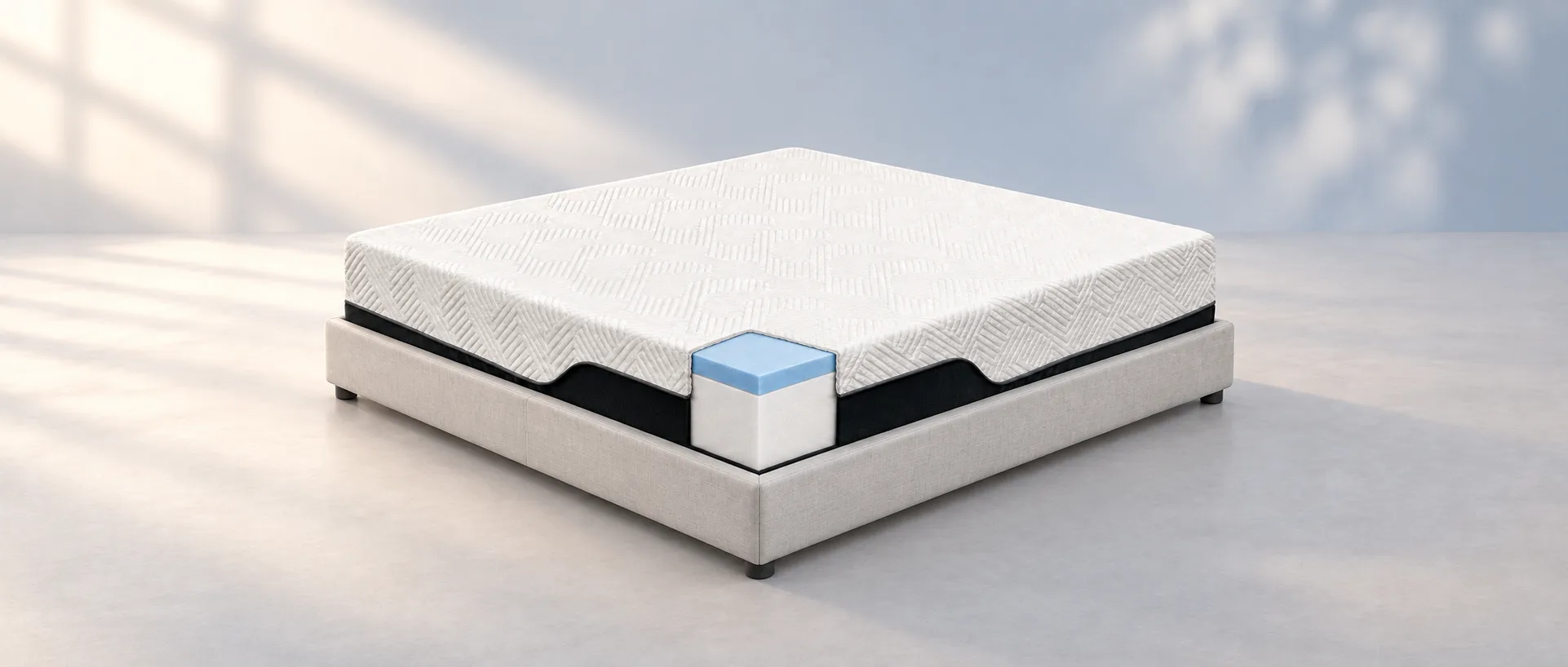
Mattress performance is driven by internal structure, not surface feel. How the comfort layers interact with the support core determines weight distribution, spinal support, and long-term shape stability.
Mattresses that emphasize thick comfort layers but use weak support cores often perform well initially but lose support quickly under repeated use. Structural balance is more important than first-impression softness, especially for hospitality or rental environments.

3. Prioritize Foam Density Over Mattress Thickness
Mattress thickness is often mistaken for quality, but it is a poor indicator of durability. Foam density has a far greater impact on compression resistance, resilience, and lifespan.
A thinner mattress made with higher-density foam can outperform a thicker mattress built with low-density materials. When evaluating mattresses online, density is one of the most reliable indicators buyers can use to estimate long-term performance.

4. Check Suitability for High-Frequency or Multi-User Use
Mattresses designed for single-user residential settings may not withstand frequent or rotating users. In hotels, serviced apartments, and rental properties, materials fatigue faster and structural weaknesses become apparent sooner.
Online buyers should assess factors such as load tolerance, edge support strength, and material recovery speed to determine whether a mattress can handle high-frequency use without early degradation.
5. Read Online Reviews for Patterns, Not Emotions
Individual reviews are often influenced by personal expectations and usage habits, making them unreliable on their own. Star ratings alone provide limited value for procurement decisions.
Buyers should look for repeated patterns across reviews, such as consistent reports of sagging, slow recovery, edge collapse, or uneven firmness. These recurring issues are stronger indicators of structural or material limitations.
6. Confirm Packaging and Compression Details Before Ordering
Packaging and compression directly affect mattress performance after delivery. Excessive compression or extended storage time can damage foam structure and slow or prevent full recovery.
Before ordering, buyers should confirm maximum compression duration, recommended storage conditions, and expected recovery time after unpacking. These factors are especially important for bulk orders that may remain in storage before use.

7. Evaluate Return and Replacement Feasibility, Not Just Policy Text
Return policies may appear flexible online but can be difficult to execute for bulky products like mattresses. For B2B buyers, the practical process matters more than written terms.
Key considerations include logistics responsibility, replacement timelines, and whether bulk claims can be handled efficiently. A workable process reduces risk more effectively than a generous policy on paper.
8. Choose Sellers with Proven B2B Online Fulfillment Experience
Suppliers with B2B online fulfillment experience typically provide consistent SKUs, stable specifications, and clear technical documentation. They are also more likely to offer structured after-sales support.
These capabilities are critical when purchasing in volume or maintaining long-term supply. Compared to consumer-only sellers, B2B-focused suppliers generally offer higher execution reliability.
FAQ
1. Is buying mattresses online suitable for bulk or B2B procurement?
Yes, if specifications, packaging standards, and after-sales processes are clearly defined and executable.
2. What is the biggest risk of buying a mattress online?
Inconsistent quality between product listings and delivered mattresses.
3. Can online reviews be trusted for procurement decisions?
Only when clear patterns appear across multiple reviews.
4. How long should a compressed mattress recover after delivery?
Typically 24–72 hours, depending on materials and compression duration.
5. Are thicker mattresses always better for online purchases?
No. Structure and material density matter more than thickness.