Why “Latex Mattress” Is Often Misunderstood
In the mattress industry, “latex mattress” is one of the most abused marketing terms. Many consumers assume latex automatically means natural, eco-friendly, and premium. In reality, a large percentage of so-called latex mattresses are made from synthetic latex or low-percentage blends, offering very different performance and lifespan.
If you are investing in a latex mattress—whether for personal use, hospitality projects, or retail sourcing—understanding how to identify real natural latex is essential. This guide breaks down the material science, manufacturing logic, certifications, and real-world performance differences between natural and synthetic latex, helping you avoid costly mistakes.
1. What Is Natural Latex? (Beyond the Marketing Term)
Natural latex is derived from the sap of the Hevea brasiliensis rubber tree. The sap is collected, filtered, whipped into foam, and vulcanized to create elastic, durable latex foam.
1.1 What makes natural latex truly premium is not just the source, but its structure:
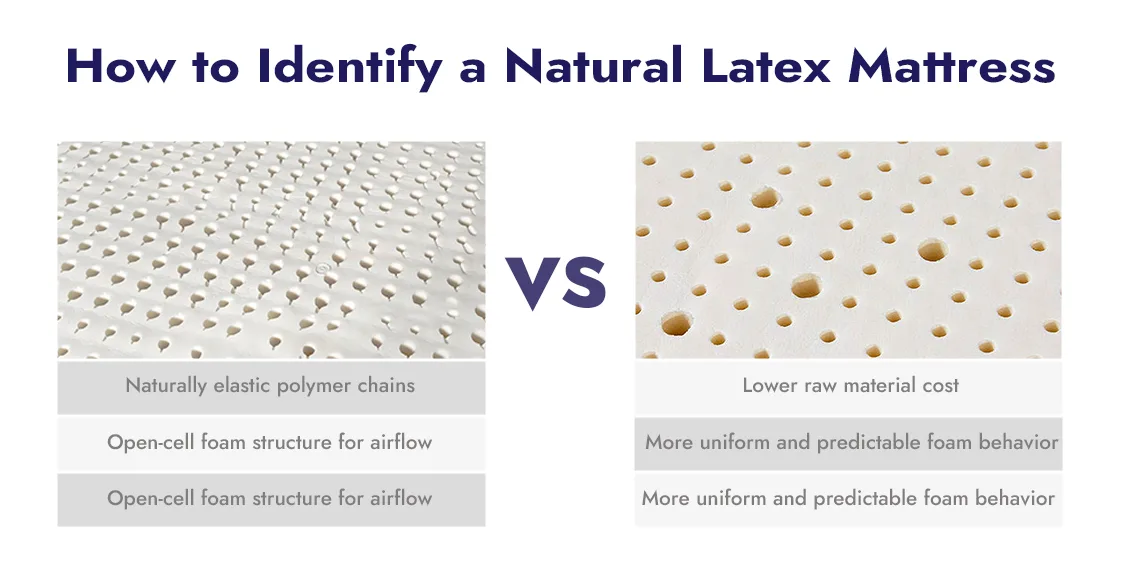
Naturally elastic polymer chains
Open-cell foam structure for airflow
High resilience with minimal material fatigue
No reliance on petroleum-based fillers
1.2 Core advantages of natural latex:
Outstanding pressure relief with immediate responsiveness
Excellent airflow and temperature regulation
Naturally resistant to dust mites and mold
Maintains shape and performance for 10–15 years or more
Natural latex is not soft by default—it is supportive, adaptive, and stable, which is why it is widely used in high-end orthopedic and hotel mattresses.
2. What Is Synthetic Latex? (And Why It Exists)
Synthetic latex is typically made from Styrene-Butadiene Rubber (SBR), a petroleum-derived material developed to replicate some elastic properties of natural rubber.
From a manufacturing perspective, synthetic latex exists for one main reason: cost control.
Characteristics of synthetic latex:
Lower raw material cost
More uniform and predictable foam behavior
Reduced elasticity compared to natural latex
Faster material fatigue under long-term compression
Higher likelihood of chemical odors and VOCs
Synthetic latex is not “bad” by default, but it does not perform like natural latex, especially in long-term durability and breathability.
3. Natural vs Synthetic Latex: Performance Comparison
| Aspect | Natural Latex | Synthetic Latex |
| Material source | Rubber tree sap | Petroleum-based |
| Elastic response | Highly responsive | Slower rebound |
| Breathability | Excellent | Moderate to low |
| Durability | 10–15 years | 5–8 years |
| Compression resistance | Strong | Weaker |
| Odor profile | Mild, natural | Chemical |
| Environmental impact | Renewable | Non-renewable |
| Cost | Higher | Lower |
Key takeaway:
Natural latex excels in long-term performance, while synthetic latex prioritizes short-term affordability.

4. How to Identify a Genuine Natural Latex Mattress
4.1 Read the Material Description Carefully
Reliable and transparent descriptions include:
100% Natural Latex
Natural Rubber Latex
NR Latex
Be cautious of vague or invented terms such as:
“Eco latex”
“Green latex”
“Latex-inspired foam”
4.2 Ask for the Latex Composition Percentage
Professional manufacturers disclose:
95%–100% natural latex content
If a mattress is labeled as:
Blended latex → often 20–40% natural latex
Latex foam → may be entirely synthetic
No percentage = no transparency.
4.3 Verify Third-Party Certifications
Certifications matter because latex content cannot be verified visually.
Key certifications include:
GOLS (Global Organic Latex Standard) – confirms organic natural latex
OEKO-TEX® Standard 100 – ensures chemical safety
eco-INSTITUT – low emissions and material purity
LGA – durability and performance testing
A lack of certification is a red flag for premium-priced latex mattresses.
4.4 Density and Weight as a Physical Indicator
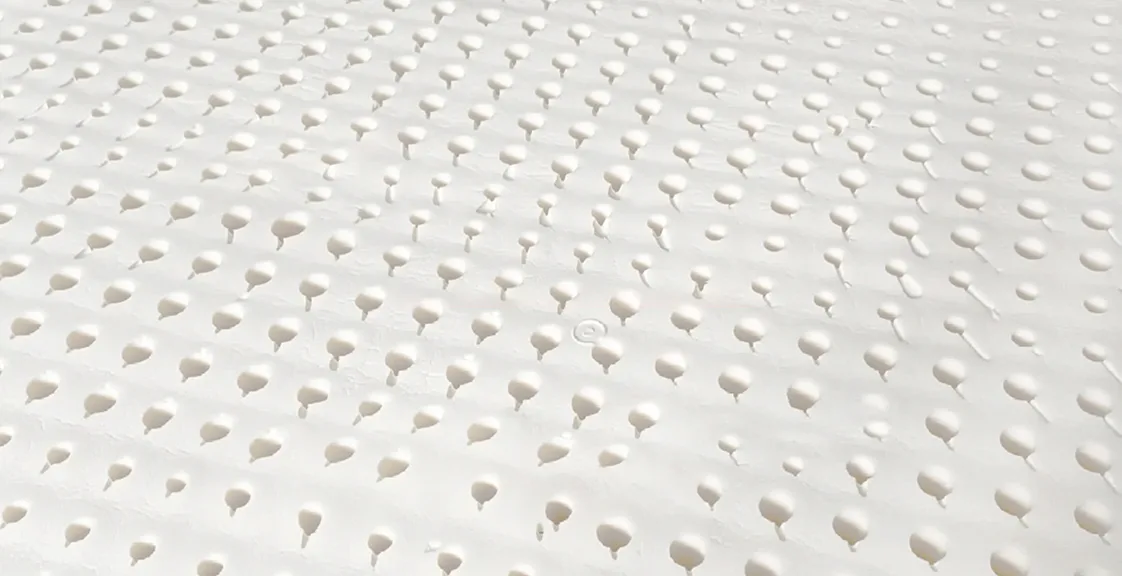
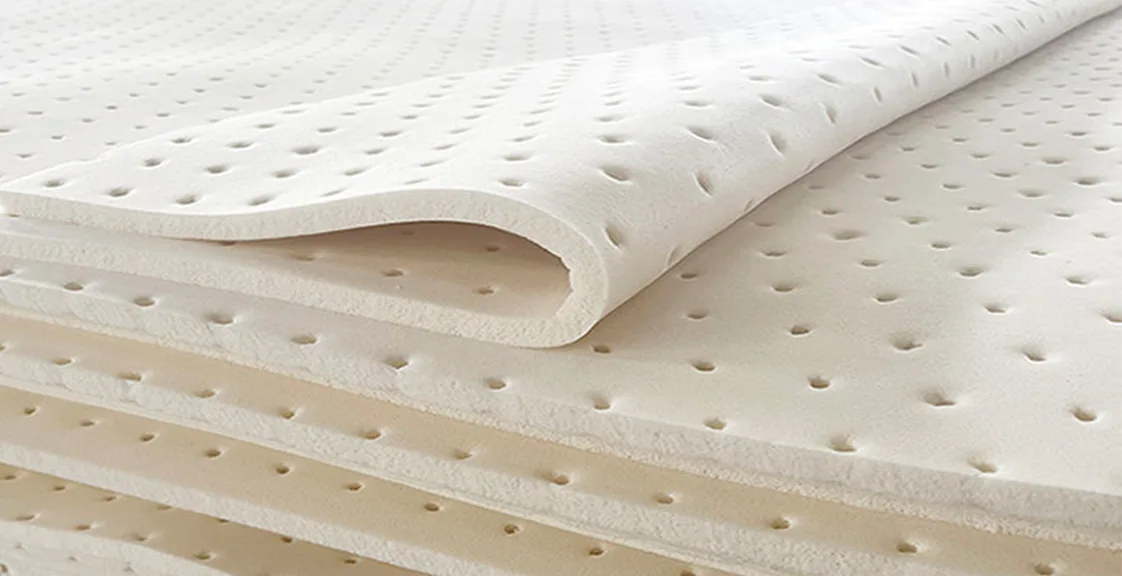
Natural latex is dense and heavy.
A queen-size all-natural latex mattress is noticeably heavier than foam or synthetic alternatives.
Lightweight “latex” mattresses are often:
Low-density blends
Synthetic latex cores
4.5 Odor Test (Secondary Reference Only)
Natural latex: subtle rubber or vanilla-like scent
Synthetic latex: sharp or plastic-like odor
Odor alone should not be your only judgment, but it supports other indicators.
5. Dunlop vs Talalay: Process Does NOT Equal Material
Dunlop Latex:
Denser and firmer feel
Slightly less uniform
Excellent for support layers
Talalay Latex:
Lighter, more consistent cell structure
Softer initial feel
More breathable and expensive
Important:
Both processes can produce 100% natural or synthetic latex. The process does not define purity.
6. Is Natural Latex Always the Best Choice?
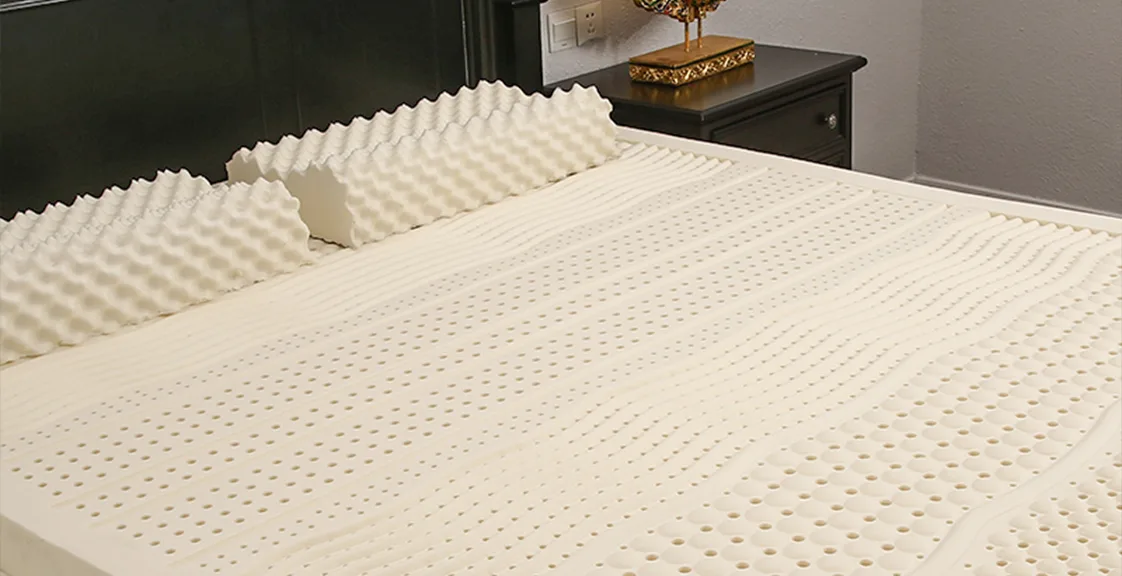
Natural latex is ideal if you value:
Long-term durability
Health-conscious materials
Stable spinal support
Sustainable sourcing
Synthetic or blended latex may be reasonable for:
Budget-focused projects
Short-term usage
Guest rooms or rental properties
The right choice depends on use case, lifespan expectations, and budget, not marketing labels.
7. FAQs – English
Q1: Does “100% latex mattress” mean natural latex?
No. It can be 100% synthetic latex. Always check for “100% natural latex” and certifications.
Q2: Is natural latex suitable for people with allergies?
Yes. Properly processed natural latex is hypoallergenic and resistant to dust mites.
Q3: Why do natural latex mattresses cost more?
Higher raw material cost, complex processing, certification fees, and longer lifespan.
Q4: Can a mattress contain both latex and foam?
Yes. Many mattresses use natural latex comfort layers over other support materials.