Choosing a mattress for children directly affects sleep quality and spinal development. Because children’s bodies are still growing, the wrong mattress—too soft, poorly supported, or made with unsafe materials—can lead to poor posture and restless sleep.
This guide explains how to choose the right mattress for children, focusing on firmness, spinal support, certified-safe materials, and age-specific needs to help parents and institutions make informed decisions.
1. Why Mattress Selection Is Critical for Children
Children spend a significant portion of their daily life sleeping. During sleep, the body recovers, grows, and develops, especially the spine and musculoskeletal system.
1.1 The Role of Sleep in Physical Development
Sleep is essential for growth hormone release and tissue recovery. A stable and supportive sleep surface helps the body relax naturally and maintain proper posture throughout the night.
1.2 Risks of an Inappropriate Mattress
An unsuitable mattress may cause uneven pressure distribution, excessive sinking, or insufficient support. Over time, this can contribute to poor sleep quality, frequent movement during sleep, and discomfort that children may not clearly communicate.
2. Sleep Quality and Spine Development in Children
2.1 Maintaining Neutral Spine Alignment
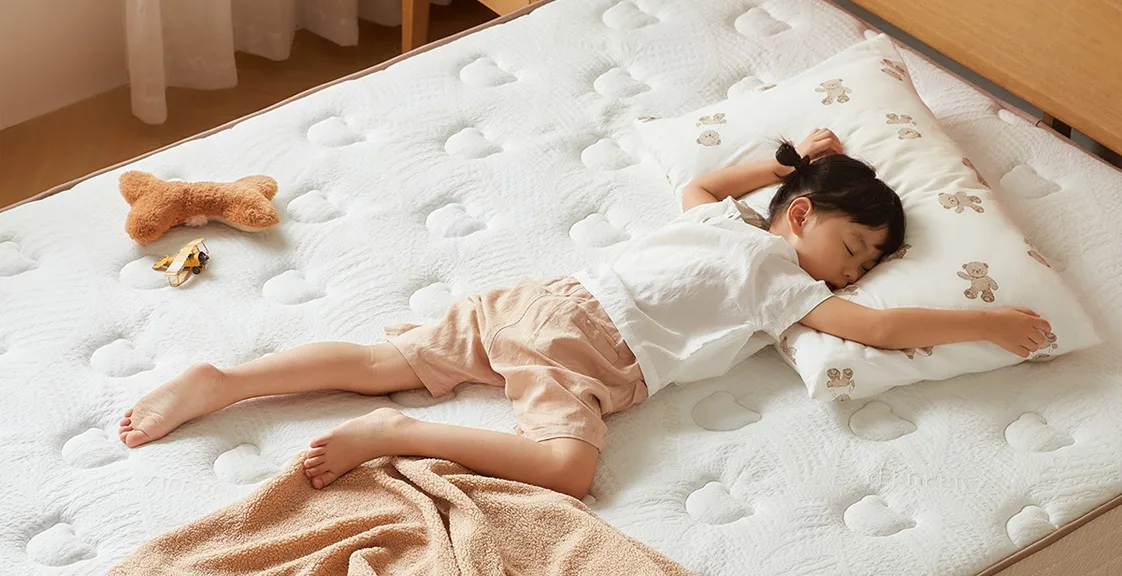
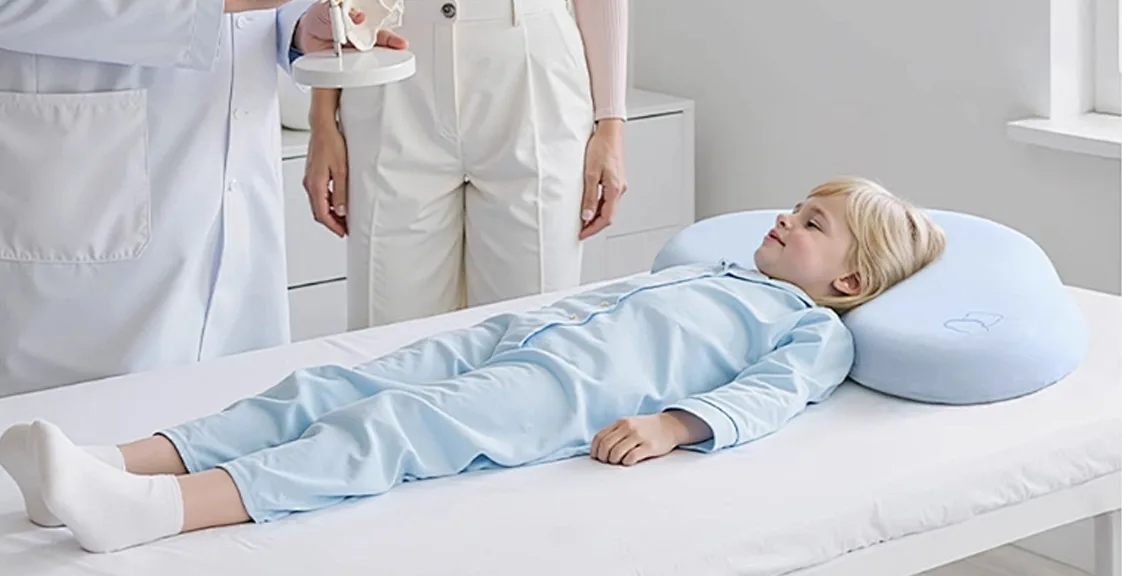
A healthy sleeping position requires the spine to remain in a neutral alignment, where the head, shoulders, and hips are properly supported. A suitable children’s mattress distributes body weight evenly and prevents abnormal curvature during sleep.
2.2 Long-Term Impact of Poor Spinal Support
Consistent use of a poorly supportive mattress may lead to posture issues, muscle fatigue, and restless sleep. For children, whose spines are still forming, long-term exposure to improper support may affect healthy development.
3. Key Factors to Consider When Choosing a Mattress for Children
3.1 Mattress Firmness
Firmness is one of the most important considerations. In most cases, a medium-firm mattress is recommended for children, as it provides sufficient resistance to support the spine while remaining comfortable.
Mattresses that are too soft may feel comfortable initially but often lack the ability to support the body evenly over time.
3.2 Support Structure and Internal Construction
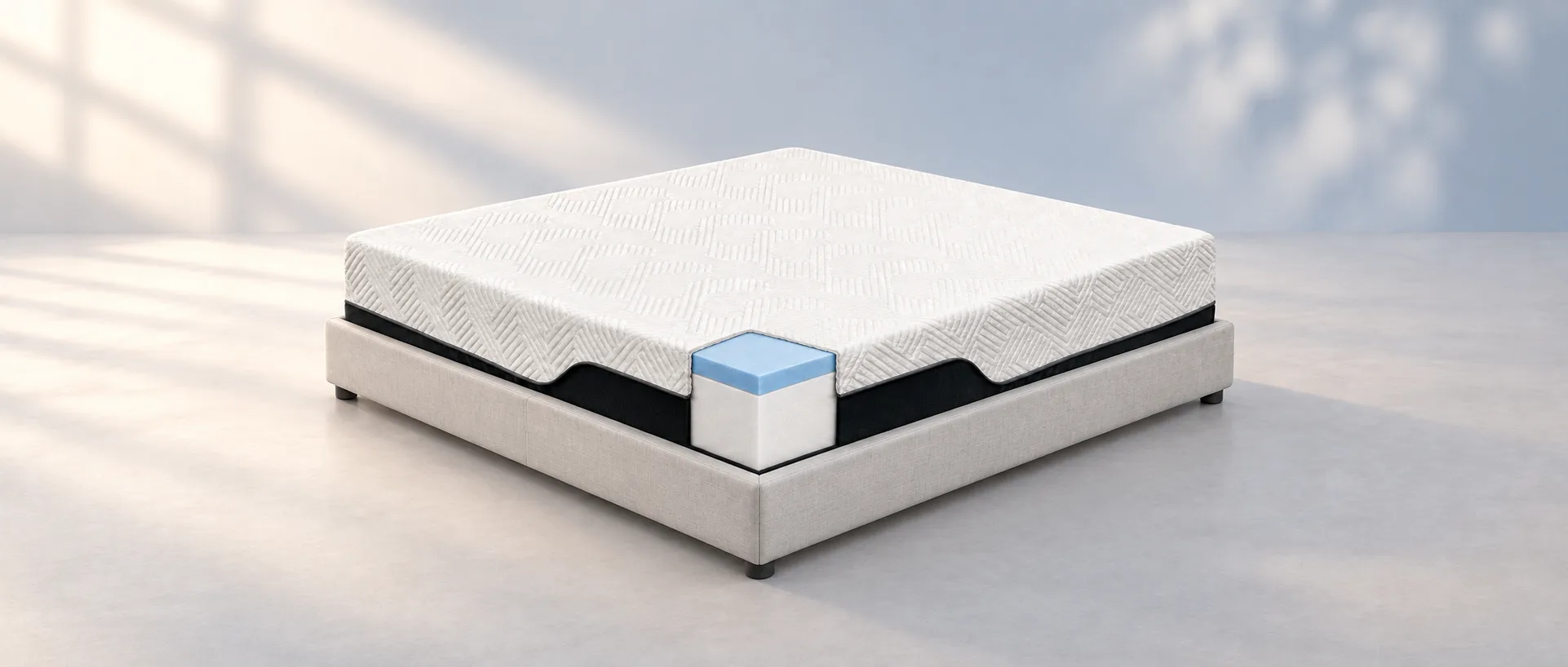
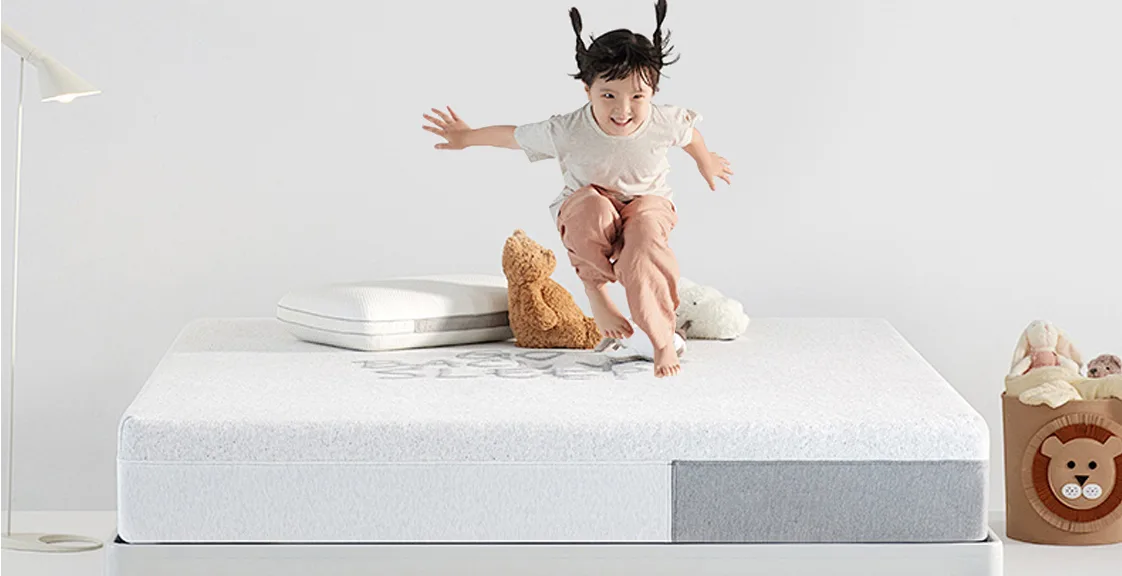
A high-quality children’s mattress should provide stable, consistent support across the entire sleeping surface. Common supportive constructions include high-density foam mattresses, hybrid mattresses with pocket springs and foam layers, and firm latex mattresses.
The internal structure should be durable and resistant to sagging, ensuring long-term support as the child grows.
3.3 Materials and Safety Certifications
Children are more sensitive to chemical exposure, making material safety a critical factor. Reputable children’s mattresses often carry certifications such as CertiPUR-US®, OEKO-TEX® Standard 100, and GREENGUARD Gold, which indicate low chemical emissions and safer material composition.
These certifications help ensure the mattress is suitable for long-term use in homes, schools, and childcare environments.
3.4 Breathability and Temperature Regulation
Children tend to sleep warmer than adults. Mattresses with breathable structures, open-cell foam, or ventilated layers improve airflow and help regulate body temperature, reducing sleep disruption caused by overheating.
4. Choosing a Mattress Basedon Age and Growth Stage
4.1 Toddlers and Preschool Children
For younger children, firmer mattresses with thinner profiles are recommended to provide stable support and enhance safety. Simplicity and firmness are often more important than additional comfort layers at this stage.
4.2 School-Age Children
As children grow, their mattresses should balance comfort and support. Medium-firm mattresses with improved pressure distribution help accommodate increased body weight and movement during sleep.
4.3 Teenagers
Teenagers require stronger spinal support and increased durability, as their bodies approach adult size. Mattresses should maintain shape and support under higher weight and long-term use.
5. Common Mistakes When Choosing a Children’s Mattress
Many parents focus primarily on softness or price, overlooking structural support and safety certifications. Other common mistakes include using adult mattresses for children or ignoring breathability and durability.
Avoiding these mistakes can significantly improve sleep quality and long-term comfort.
6. Frequently Asked Questions
6.1 What firmness level is best for children?
A medium-firm mattress is generally considered the best option for supporting spinal alignment while providing adequate comfort.
6.2 Are foam mattresses safe for children?
Foam mattresses are safe if they use certified materials and meet standards such as CertiPUR-US® for low chemical emissions.
6.3 How often should a children’s mattress be replaced?
Most children’s mattresses should be replaced every 5–8 years, depending on material quality and usage.
6.4 Can children use adult mattresses?
Adult mattresses are often designed for different weight distributions and comfort preferences, making them less suitable for children’s spinal development.