Spring mattresses are not inherently hard or soft. Their firmness can vary significantly depending on construction, materials, and design. Most spring mattresses on the market fall between medium and firm, typically rated 5 to 8 on a 10-point firmness scale.
The firmness of a spring mattress is mainly influenced by the type of coil system, coil gauge and zoning, and the comfort layers placed above the springs. Thanks to this modular structure, spring mattresses offer excellent flexibility in firmness adjustment and customization, making them suitable for a wide range of sleepers with different body types, sleep positions, and comfort preferences.
1. What Is a Spring Mattress Made Of?
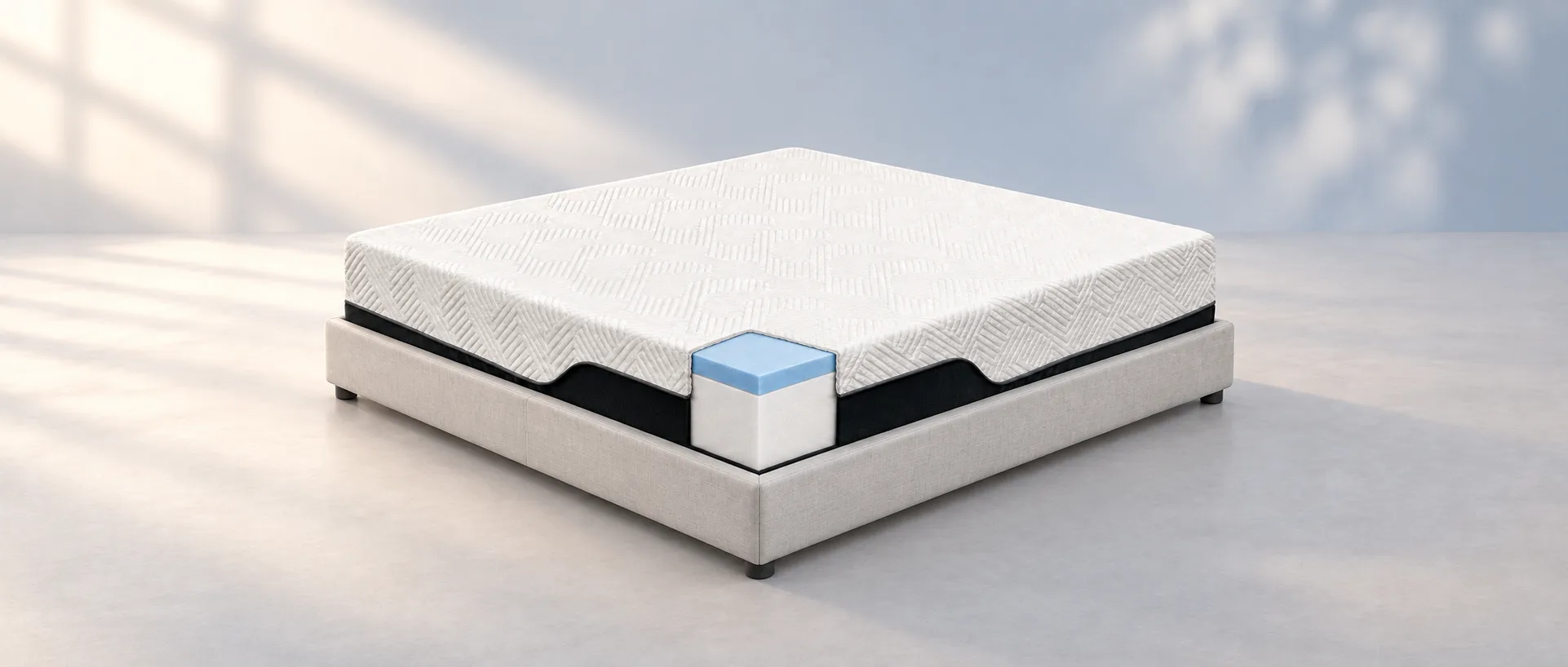
A spring mattress is typically made up of three main components: the core support system, the comfort layers, and the outer cover. Each layer plays a different role in determining how firm or soft the mattress feels.
The core support system consists of metal coils that provide structural support and weight distribution. Above the coils are comfort layers made from foam, latex, or fiber materials, which influence pressure relief and surface feel. Finally, the cover and quilting affect the initial touch and temperature regulation but have only a minor impact on firmness.
2. What Factors Affect the Firmness of a Spring Mattress?
2.1 Coil Type
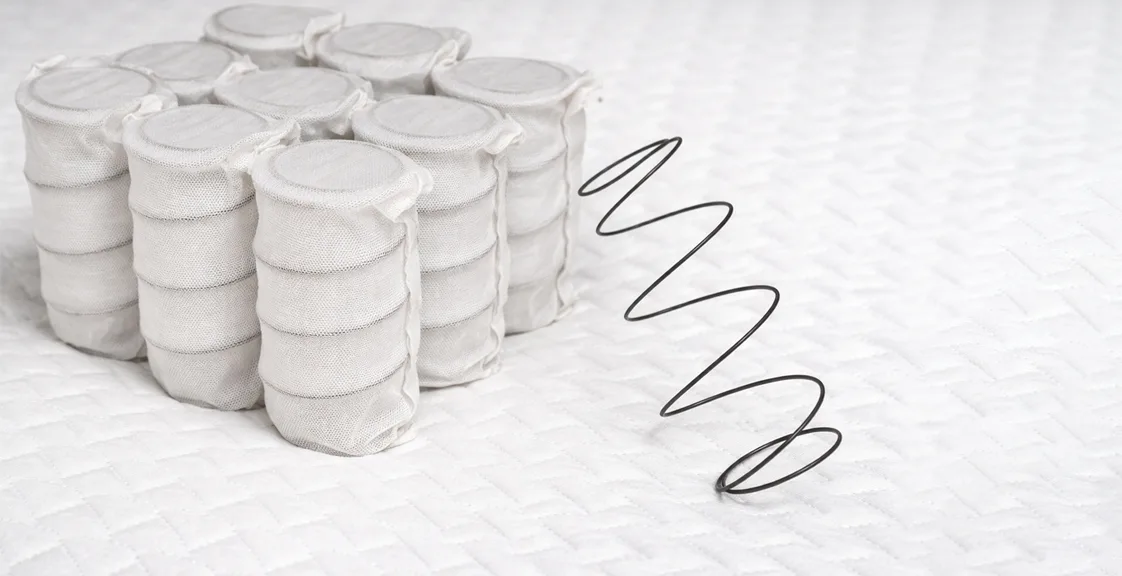
Traditional Bonnell coils generally create a firmer and more uniform sleeping surface, while pocket springs allow each coil to move independently, enabling more precise firmness control and pressure relief.
2.2 Coil Gauge & Count
Thicker coil wire results in a firmer mattress. A higher coil count improves support accuracy rather than directly increasing firmness.
2.3 Comfort Layers
Pillow-top and memory foam layers reduce the perceived firmness, while latex provides responsive support without excessive softness.
2.4 Zoned Spring Systems and Firmness Distribution
Zoned spring systems divide the mattress into multiple support zones, such as 3-zone, 5-zone, or 7-zone designs. These zones are engineered to offer firmer support under heavier areas like the hips and lower back, while providing softer support for the shoulders and legs.
As a result, a zoned spring mattress does not feel uniformly firm across the surface. Instead, it delivers targeted firmness where support is most needed, improving spinal alignment without increasing overall hardness.
3. Can You Adjust the Firmness of a Spring Mattress?
Yes, the firmness of a spring mattress can be adjusted in several ways. During manufacturing, manufacturers can change coil gauge, coil zoning, or the thickness and type of comfort layers to achieve different firmness levels. This is especially common in OEM and customized mattress production.
After purchase, firmness can still be modified. Mattress toppers are a popular option to soften a mattress, while a solid bed base can increase overall firmness. Some double-sided spring mattresses also allow users to flip the mattress to extend its lifespan and slightly alter firmness over time.
3.1 Firmness Customization Options
Many modern spring mattresses offer firmness customization options, especially for OEM and premium models. Manufacturers can adjust coil zoning, comfort layer thickness, or even create dual-firmness designs for couples with different preferences.
3.2 How Firmness Affects Temperature Regulation
Firmness plays an important role in temperature regulation. Softer spring mattresses often allow deeper sinkage, which can reduce airflow and trap body heat. Firmer spring mattresses usually maintain better air circulation due to reduced body contact and a more open coil structure.
As a result, medium-firm to firm spring mattresses are often preferred by hot sleepers.
4. Who Should Choose Which Firmness?
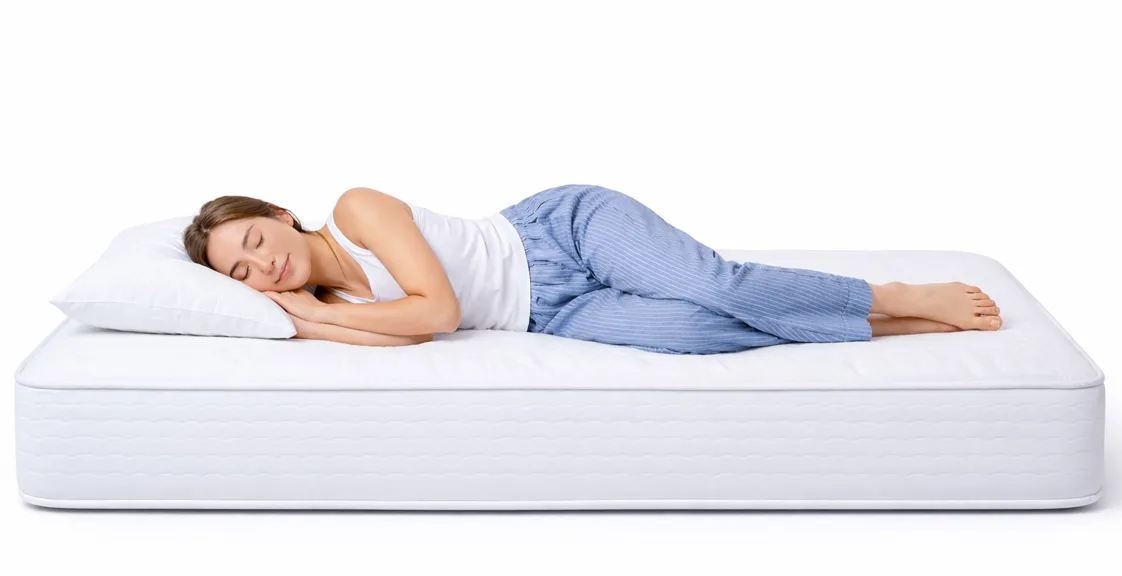
Choosing the right firmness depends largely on sleeping position and body weight. Side sleepers usually benefit from medium or medium-soft spring mattresses that reduce pressure on the shoulders and hips. Back sleepers often prefer medium-firm mattresses that support spinal alignment, while stomach sleepers typically need firmer support to prevent excessive sinking.
Body weight also matters. Lighter sleepers may find firm mattresses uncomfortable, while heavier individuals often need firmer spring systems for proper support and durability.
5. How to Choose the Right Firmness When Buying a Spring Mattress
5.1 How to Test Firmness Properly
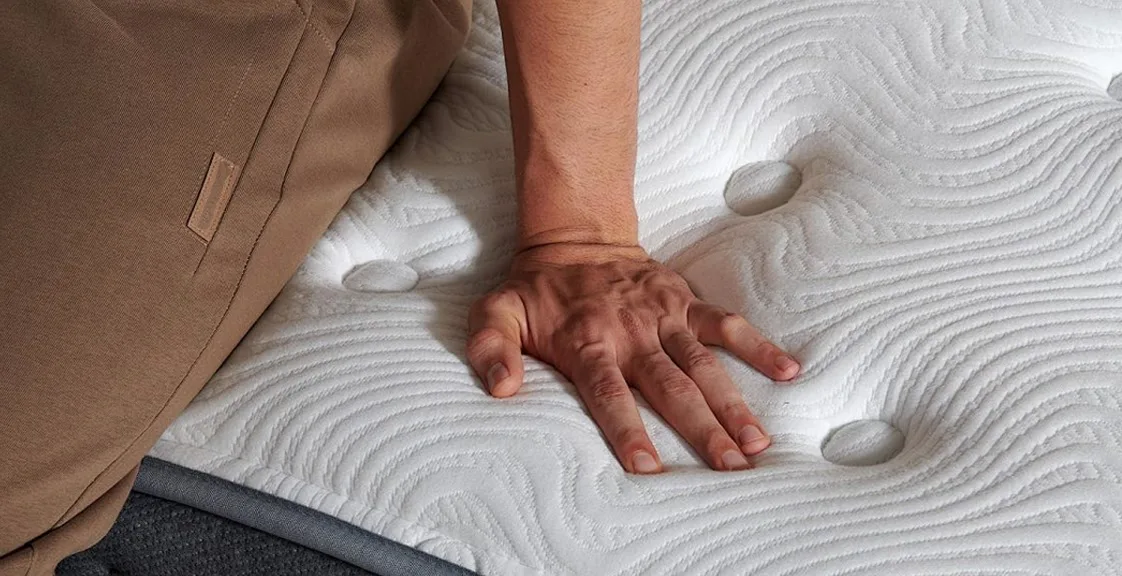
Testing mattress firmness requires more than pressing it by hand. Ideally, lie down in your usual sleeping position for 10–15 minutes and check whether your spine feels supported and pressure points are relieved.
For online purchases, look for detailed firmness descriptions, customer reviews from people with similar body types, and trial periods.
6.FAQ
Q:Are spring mattresses usually firm?
A:Spring mattresses are not always firm. While many models fall between medium and firm, their actual firmness depends on coil type, zoning design, and comfort layers. Spring mattresses can range from soft to very firm.
Q:What makes a spring mattress firmer or softer?
A:The firmness of a spring mattress is influenced by coil gauge, coil type, zoned support systems, and the thickness and materials of the comfort layers. Thicker coils and fewer comfort layers usually result in a firmer feel.
Q:Do zoned spring mattresses feel firmer?
A:Zoned spring mattresses do not feel firmer overall. Instead, they provide firmer support in key areas like the lower back and hips, while remaining softer in areas such as the shoulders, improving comfort and spinal alignment.
Q:Is a firmer spring mattress better for back pain?
A:Not necessarily. A medium-firm spring mattress is often recommended for back pain because it balances comfort and support. Extremely firm mattresses may increase pressure points for some sleepers.
Q:Do firm spring mattresses sleep cooler?
A:Yes, firmer spring mattresses often sleep cooler because they allow less body sinkage and better airflow around the coils, making them a good option for hot sleepers.
Q:Can the firmness of a spring mattress be customized?
A:Yes. Many spring mattresses offer firmness customization options, such as adjustable coil zoning, different comfort layer materials, or dual-firmness designs for couples.
Q:How can I properly test spring mattress firmness?
A:To properly test firmness, lie on the mattress in your usual sleeping position for 10–15 minutes. Avoid judging firmness by pressing with your hand, and focus on spinal support and pressure relief.